A large dark bee diving into a flower calls for a different observation than one repeatedly entering a round hole in a wooden beam. The first may be collecting food; the second may be using a nest. Black bumblebees and other dark bees can look alike in flight, so give yourself a moment to watch before deciding what you have found.
Giant black bees are not a single kind of bee, either. Size and color can point you toward a group, but the useful clues are often on the abdomen, in the hair, and in the insect’s behavior. A photograph and the location are worth more than a dramatic buzz alone.
Giant black bee clues: start with the abdomen
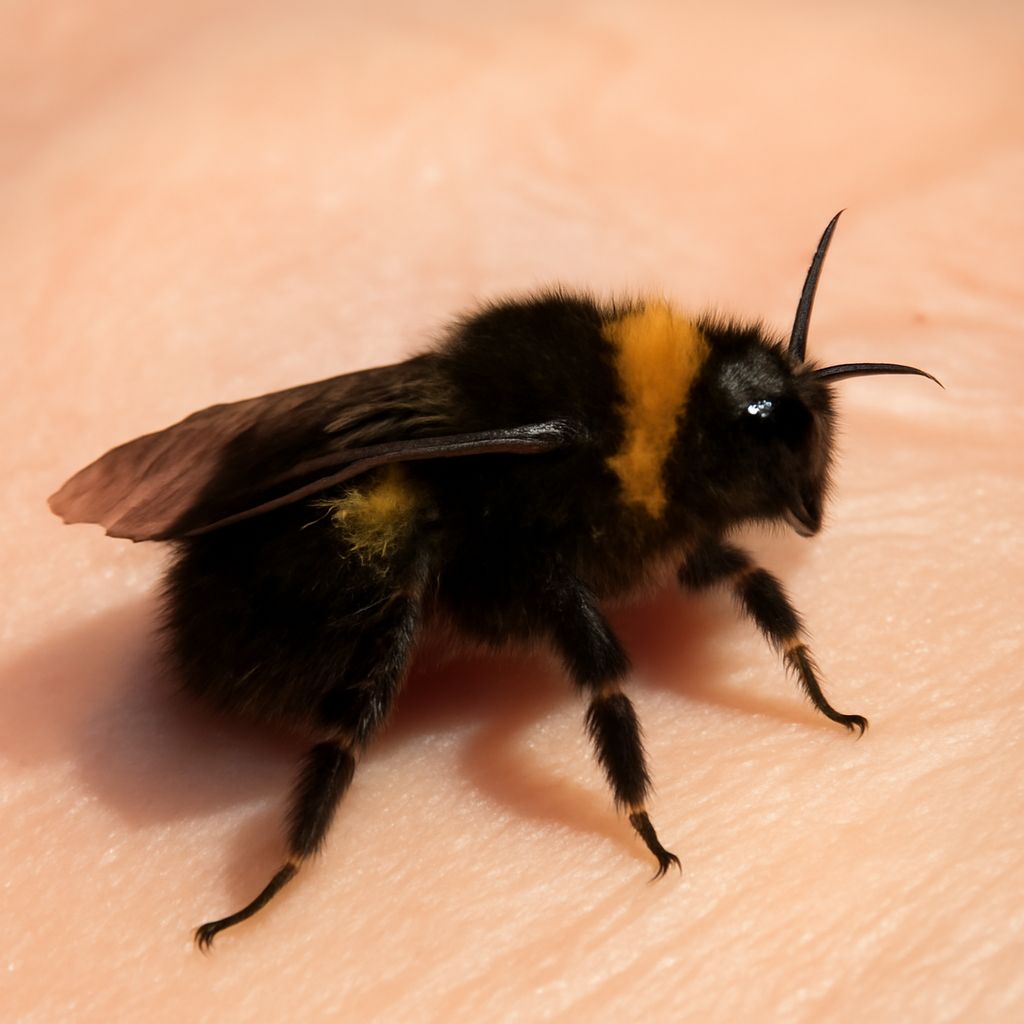
A giant black bee with a broad body and a fuzzy chest might be a large carpenter bee, a bumble bee, or another bee. Wait for it to land and look at the rear section of the body, called the abdomen. In many large carpenter bees, much of its upper surface looks smooth and shiny, with relatively sparse hair. Bumble bees generally have dense hair on the abdomen as well as the thorax, the middle section where the wings attach.
The difference is easier to see in good light and from above. A bee coated in pollen, an old individual with worn hair, or a view through glass can make the distinction less obvious. The Cornell guide to carpenter bees provides comparison photographs and explains the shiny-abdomen clue for familiar North American examples.
Treat that contrast as a useful starting point, not a universal key to every bee in the tropics. Hair patterns and colors vary across species and between sexes, and an insect’s angle can hide the area you need to see.
Dark coats, yellow bands, and misleading shine
A dark bumble bee may look almost uniformly dark, while another has yellow or orange hair on part of the body. Similarly, some carpenter bees have pale hair on the thorax, and others appear darker or have a metallic sheen. A bright patch can be made of hairs rather than a colored surface underneath; in a photograph, zoom in on its texture as well as its color.
Black and yellow bees therefore deserve the same careful look as their darker relatives. Ask whether the abdomen looks velvety or glossy, whether the bands continue around the body, and whether the insect is carrying pollen. The Cornell bumble bee guide shows the generally robust, hairy appearance of this group.
Light can play tricks, too. Wings may reflect blue or purple without the abdomen having the same color. Photograph the insect from above and from the side if you can do so without crowding it. A silhouette against the sky is beautiful, but it rarely captures the details needed for identification.
What nest behavior can and cannot tell you
Many bumble bees live in colonies and use existing cavities, often underground, although nest locations differ by species. If several similarly shaped workers regularly travel to and from an opening in the ground or a sheltered cavity, that pattern may help narrow the possibilities. Do not put your face close to the entrance: a nest is a place the bees may defend.
Many large carpenter bees excavate tunnels in wood or use existing ones. A bee repeatedly entering a round hole in a beam, fence, or dead branch is a useful clue, especially if you also see its relatively shiny abdomen. The hole itself is not proof: another insect may use an existing opening, and different carpenter bees use different nesting materials. Watch from a distance rather than probing the hole.
At flowers, both groups can collect nectar and pollen, so feeding behavior alone will not settle the question. Some bees vibrate flowers to release pollen, a behavior known as buzz pollination. That is a fascinating observation, but it is shared by more than one bee group.
Could it be something else?
A large dark wasp may visit flowers too. Many wasps have a more obviously narrow waist and a smoother-looking body, although there are exceptions. Some flies mimic bees; flies have one pair of wings, while bees have two pairs, but overlapping wings on a moving insect can be hard to count. A fly may also show very large eyes and short antennae. None of these signs should be judged from a single blurry view.
Size helps only when you know what was measured. If a big black bumble bee lands beside a familiar flower, estimate its body length from the head to the tip of the abdomen, excluding antennae and wings. A ruler or a photograph with an object of known size in the same plane is better than comparing it with a thumb held closer to the camera. Never catch an insect just to measure it.
Queens and workers can differ considerably in size, and different species overlap. Big black bumblebees are not automatically queens, and a loud, close flyby can make even a modest insect seem enormous.
Record the place as carefully as the bee
Note the country, region, elevation if known, date, habitat, flower or nesting material, and your best estimate of body length. Take clear photographs of the face, back, and side when possible. These details give a local naturalist a useful starting point and help distinguish a documented observation from a guess based on color.
A guide made for Pennsylvania or California illustrates helpful body features, but it is not a species list for Santa Fe, Veraguas, or anywhere else in Panama. Use a regional field guide or consult local experts before attaching a species name. Black bumble bees and other large pollinators can be appreciated without a label: give feeding insects room, leave nests intact, and enjoy the brief close-up while the flowers hold their attention.