A women’s hiking backpack should match the route’s supplies, the wearer’s torso, and the weight carried. For most day hikes, a 15- to 25-liter pack holds water, food, a light layer, navigation tools, and basic emergency items. A 25- to 35-liter pack is more useful for cold-weather clothing, extra equipment, or a longer day.
The pack, footwear, and socks work as one system. A heavier load increases fatigue and can change how the feet land, while overly thick socks or poorly fitted shoes can create pressure before the pack becomes uncomfortable. Fit each component for the same route, distance, and expected conditions.
Choose and Fit a Women’s Hiking Backpack
Start with volume, then fit. A compact 15- to 20-liter pack suits a short, warm-weather route with a small amount of water. Around 20 to 30 liters gives more room for layers, rain protection, lunch, and first-aid supplies without requiring a large frame. Capacity should not be used to justify carrying unnecessary weight.
Torso length matters more than overall height. Measure from the prominent vertebra at the base of the neck to the top of the hip bones, or use the pack maker’s fitting method. A women’s-specific pack may have a shorter torso range, narrower shoulder spacing, and a hipbelt shaped for a different hip-to-waist ratio, but the correct fit is the one that rests securely on the individual body.
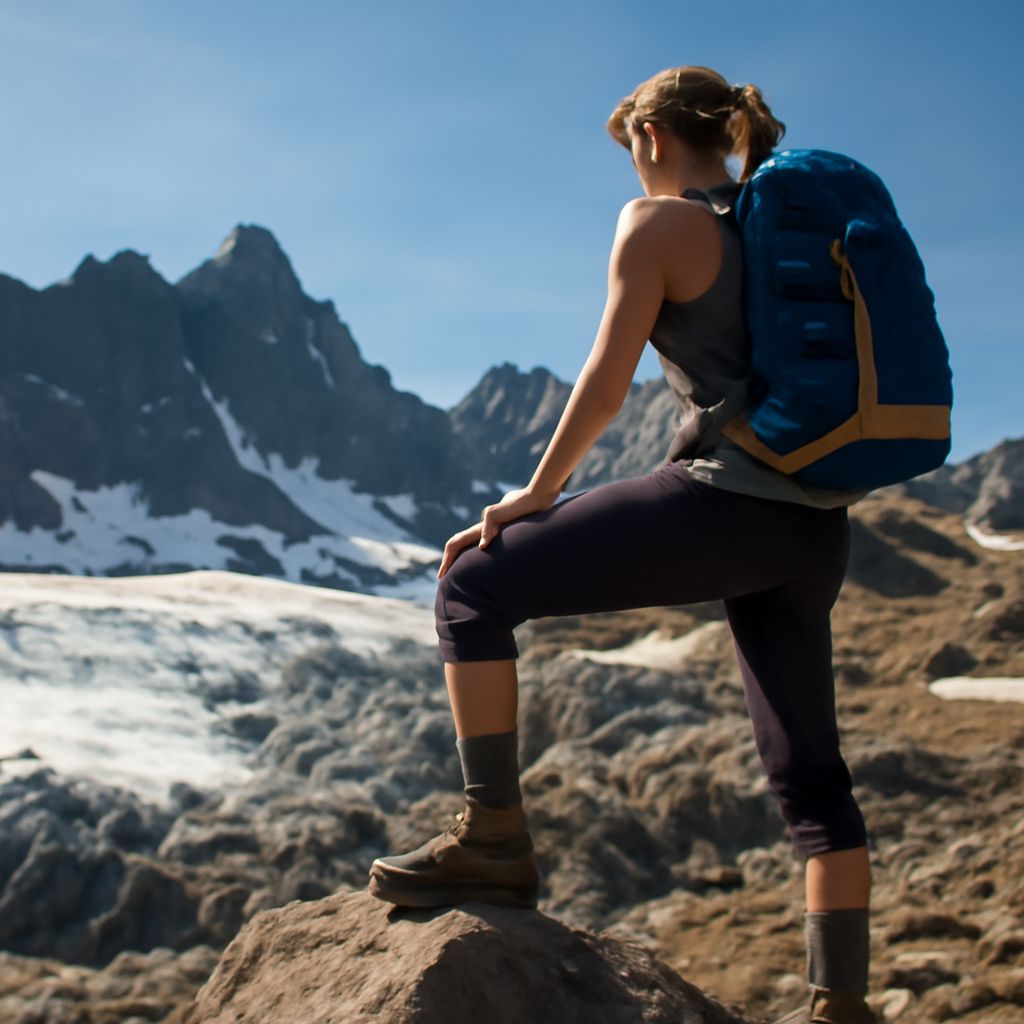
Load the heaviest items close to the spine and centered between the shoulders and hips. The hipbelt should sit over the hip bones and carry much of the weight, while the shoulder straps remain snug without digging in. S-shaped shoulder straps can create more room around the chest than straight straps. The sternum strap should stabilize the shoulder straps without restricting breathing.
For heavier day loads, a supportive hipbelt, firm back panel, and internal frame or framesheet reduce movement and transfer weight toward the hips. A lightweight pack without substantial support can work for a small load, but it may feel unstable when filled with extra water, clothing, or equipment. After adjustment, the pack should stay close to the back while climbing, bending, and looking from side to side.
Choose Women’s Hiking Sneakers for the Terrain
Women’s hiking sneakers provide enough protection for maintained, dry trails when the load is light and the route has few sharp rocks or wet, uneven sections. They are not equivalent to ordinary street sneakers on every surface. Street soles may lack the rubber compound, tread depth, sidewall protection, and stability needed for loose gravel, mud, slick roots, or rough rock.
Match traction to the trail. Shallow, closely spaced lugs roll efficiently on firm paths, while deeper and more widely spaced lugs shed mud and grip loose ground. For rocky or off-camber routes, look for a protective toe cap, a stable heel counter, and possibly a rock plate. Wet routes benefit from a dependable outsole compound and an upper that does not stay waterlogged.
Flex should also follow the terrain. A flexible sneaker feels natural on smooth trails and reduces stiffness over a short distance. A moderately structured sole gives more control on uneven ground and protects against repeated contact with stones. Excessive softness can allow the foot to twist under a loaded pack; excessive stiffness can feel inefficient on easy paths.
Fit with the intended socks and leave enough space for the toes to spread and swell during a long hike. The heel should remain seated when walking downhill, with no slipping or repeated rubbing. A secure midfoot should not require the laces to be tightened so much that the top of the foot becomes numb.
Match Women’s Hiking Socks to the Final Shoe Fit
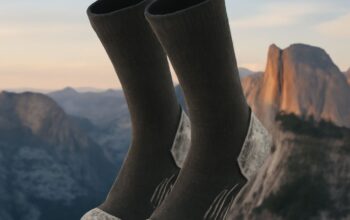
Women’s hiking socks should be selected after the shoe, because sock thickness changes the usable shoe volume. Lightweight socks suit close-fitting sneakers, warm conditions, and shorter distances. Medium cushioning adds comfort for longer routes or firm, rocky ground. Thick cushioning can help in a roomy shoe during cold conditions, but it can compress the toes if the footwear is already snug.
Choose fabric according to moisture and drying needs. Merino wool and synthetic blends manage moisture and temperature better than cotton, which absorbs sweat and dries slowly. Synthetic fibers often dry quickly in warm or humid conditions, while merino can remain comfortable across changing temperatures. A smooth, secure cuff and low-friction construction help prevent bunching and blisters.
Check the finished fit with the exact socks. The toes should move freely, the arch should feel supported without pressure, and the heel should not slide. If the sock leaves deep marks, causes tingling, or makes the shoe feel tight across the forefoot, reduce cushioning or change shoe volume rather than forcing a tighter lace pattern.
Test the Complete Setup Before Trail Day
- Pack the actual water, layers, food, and safety items expected on the route. Weigh the loaded pack and check that heavy contents sit close to the spine rather than pulling backward.
- Put on the intended women’s hiking socks and sneakers, then adjust the pack. Tighten the hipbelt first, followed by the shoulder straps and sternum strap. Walk for 20 to 30 minutes, including stairs or an incline if possible.
- Test downhill movement and uneven ground. A successful setup keeps the pack stable, holds the heel in place, and leaves the toes free without hot spots, numbness, shoulder pressure, or hipbelt pinching.
- Fix problems before increasing distance. Repack shifting items, adjust strap tension, or change the sock thickness and shoe size. If rubbing remains after adjustment, use different footwear rather than relying on a blister patch for the entire hike.