Comfortable hiking outfits start with the route, not the season alone. Pair footwear with the terrain first, then choose lower-body coverage and upper layers for heat, rain, wind, or cold. A dry, smooth trail may suit breathable trail runners and lightweight stretch pants, while rocky, wet ground calls for deeper tread, faster-drying fabric, and more coverage.
The best fit leaves room for movement without allowing fabric or footwear to shift. Hiking shoes should hold the heel securely, let the toes spread, and leave roughly a thumb’s width in front of the longest toe for downhill walking and normal foot swelling. Pants should allow a full stride, squat, and high knee lift without pulling at the waistband, hips, or knees.
Women’s Hiking Outfits: Match Shoes and Pants to Trail Conditions
Use these choices as a practical starting point for women’s hiking outfits:
- Dry and hot: Select breathable mesh trail shoes or low-cut hiking shoes, lightweight stretch pants or shorts, and sweat-wicking layers.
- Wet and muddy: Choose shoes with grippy lugs, quick-drying pants, and a rain shell. Waterproof footwear helps in sustained rain, while non-waterproof shoes may drain and dry faster after shallow crossings.
- Cool and variable: Combine supportive shoes, full-length pants, a warm mid-layer, and a shell that can be removed as the temperature changes.
Try women’s hiking shoes with the socks intended for the route, preferably later in the day when feet are slightly larger. The heel should stay planted while walking uphill, and the toes should not press against the front while walking downhill. Pants should sit securely under a hip belt without creating pressure points. Articulated knees, a gusseted crotch, and moderate stretch improve movement on steep steps.
Warm-Weather Outfit: Women’s Hiking Shoes and Breathable Layers
For a dry, hot route with firm ground, prioritize ventilation and low weight. Breathable women’s hiking shoes with mesh uppers, flexible midsoles, and moderate trail grip work well for maintained paths and day hikes. More uneven terrain may require a sturdier low-cut shoe with a protective toe cap and firmer sole.
- Upper: Wear a lightweight synthetic or merino-blend T-shirt. Add a thin, sun-protective long-sleeve shirt for exposed ridges rather than relying only on sunscreen.
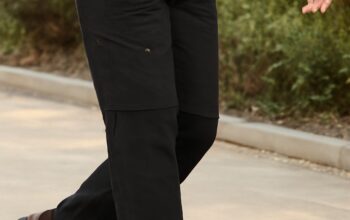
- Lower: Choose lightweight stretch hiking pants that roll or zip above the ankle, or breathable shorts where brush, insects, and sun exposure are not concerns. A smooth waistband reduces rubbing beneath a pack.
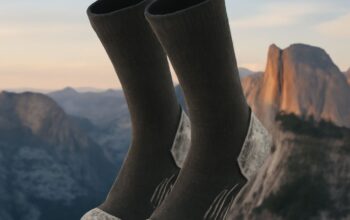
- Socks: Use thin merino or synthetic socks that wick moisture and fit smoothly around the heel and toes. Cotton can stay damp and increase blister risk.
- Footwear: Select mesh trail runners for cooler, flatter trails or low hiking shoes with deeper lugs for loose dirt and rock.
On hot routes, a looser upper and ventilated pants help release heat, but oversized clothing can catch on branches or bunch under pack straps. Pants should cover the knees during scrambling and brushy sections; shorts provide better airflow on open, maintained trails.
Wet-Trail Outfit: Women’s Hiking Pants and Quick-Drying Layers
Wet trails demand a balance between water resistance and drying speed. Lightweight women’s hiking pants made from nylon or a nylon-elastane blend are more useful than denim or heavy cotton because they dry quickly, resist abrasion, and maintain mobility. For steady rain, pack lightweight waterproof overtrousers that fit over the hiking pants without restricting knee movement.
- Upper: Start with a synthetic or merino base layer, add a thin fleece or active insulation layer if needed, and finish with a waterproof, breathable rain shell. A hood should turn with the head without blocking peripheral vision.
- Lower: Wear tapered quick-drying pants that do not drag through mud or cover the shoe opening. Use ankle zips or adjustable hems over bulky footwear.
- Socks: Choose wool or synthetic hiking socks with cushioning matched to the shoe volume. Carry a dry spare pair in a waterproof bag for long or repeatedly wet routes.
- Footwear: Use aggressive lugs for mud and slick roots. Waterproof women’s hiking shoes suit prolonged rain and shallow puddles; breathable, non-waterproof shoes are often preferable for warm conditions with frequent water crossings.
Check that the rain shell reaches over the waistband and does not ride up when the wearer lifts a knee. Avoid stacking thick socks inside a tight shoe, since wet conditions and swelling can make pressure points worse.
Cool-Weather Outfit: Adjustable Layers for Movement and Coverage
Cool conditions call for layers that can be removed before uphill sections and replaced on exposed descents. Supportive low- or mid-cut hiking shoes with firm soles and dependable lugs suit rocky, leaf-covered, or frosty paths. Mid-cut footwear adds ankle coverage but should flex comfortably rather than restricting the stride.
- Upper: Wear a moisture-wicking base layer, a lightweight fleece or active insulated jacket, and a wind- or rain-resistant shell. A zippered mid-layer allows quick temperature control.
- Lower: Choose full-length women’s hiking pants with a brushed interior or room for thin tights. Stretch fabric, articulated knees, and a slightly higher back waistband help during climbing and pack carry.
- Socks: Use medium-weight merino or synthetic socks that fill the shoe without compressing the toes. Extra thickness should be considered when selecting the shoe size.
- Footwear: Pick shoes with enough room for thicker socks, a locked-in heel, and traction suited to wet leaves, rock, or light snow.
Test the complete cool-weather system by walking uphill, stepping over obstacles, and descending stairs. If the pants pull at the knees or the toes touch the shoe front on a descent, adjust the fit before adding another layer.