You return to a familiar pond on a frosty morning, and the turtles that spent summer on its logs have vanished. What are those turtles doing through the winter, and where have they gone for the cold months? The answer depends on the species and the shelter available nearby.
Many temperate freshwater turtles settle underwater, while a land-dwelling box turtle may dig into the ground. Both slow down as temperatures fall, but their breathing and surroundings make for two rather different winter stories.
Where Do Turtles Go in the Winter? Pond Bottoms and Woodland Soil
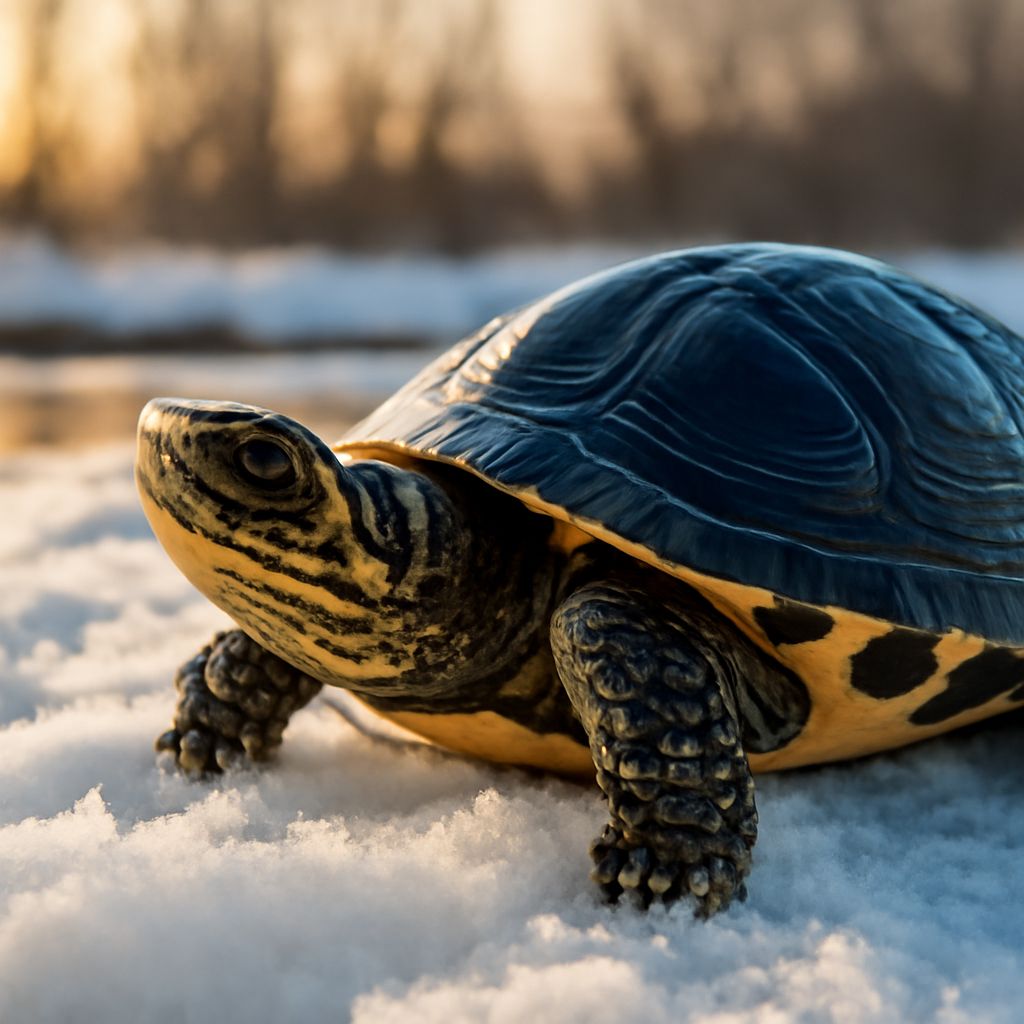
Where do turtles go in winter when a pond freezes? Painted turtles in colder parts of North America can spend the season on the bottom of a pond or other body of water, beneath ice that insulates the water below. They may rest among mud and vegetation, with their body temperature close to that of the water. Their metabolism slows dramatically, so their need for energy and oxygen falls too.
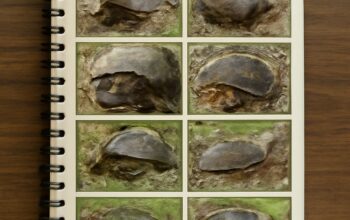
Eastern box turtles take a different route. Before the ground freezes, they use their feet to dig into loose soil, sometimes under leaves or other shelter. The National Park Service describes how box turtles make an underground chamber for the cold months. Soil and leaf cover buffer temperature changes, although a suitable site still has to protect them from dangerous freezing conditions.
Where do turtles go in the winter if they live on land? A sheltered patch of woodland can provide the answer. So where do turtles hibernate if there is no pond nearby? For a box turtle, the answer can be a patch of woodland soil; for an aquatic turtle, an underwater resting place. Where turtles spend the colder winter months depends on species, local climate, and habitat. These hibernation sites for turtles provide conditions suited to each animal. A turtle cannot simply exchange a pond bottom for a dry burrow and expect the same conditions.
Brumation, Hibernation, and a Slower Body
What do turtles do in the winter when food and warmth become scarce? How turtles spend the winter depends on their physiology as well as their shelter. Many enter brumation, a cold-season period of greatly reduced activity in reptiles. Because turtles rely on their surroundings for body heat, their body temperature and metabolism drop as the environment cools. They generally eat little or nothing during this period and draw on stored energy.
Hibernation is commonly used for a seasonal slowdown in mammals. A hibernating mammal regulates its own body temperature, while a brumating turtle’s temperature is strongly influenced by the water or soil around it. Both conserve energy, and people sometimes use “hibernate” informally for turtles, but brumation is the more specific term here.
This is not necessarily one unbroken sleep. Depending on the species and conditions, a turtle may move during a warmer spell. Its heart rate and breathing are greatly reduced, and it has much less energy to spare than it does on a warm summer day. Think of a dimmed lamp rather than a switch flipped permanently off.
How Can a Turtle Stay Underwater So Long?
An active turtle normally uses lungs and surfaces for air. Cold water changes the arithmetic: a chilled turtle needs far less oxygen than a warm, active one. Some species can also absorb oxygen dissolved in water through specialized tissues. Ontario’s spiny softshell profile describes oxygen uptake through the mouth and cloaca, the opening used by the digestive, urinary, and reproductive systems.
Different species have different tolerances. Painted turtles can endure extended periods with very little or no oxygen by switching to a form of metabolism that does not require it. That process produces acids, and their shells help buffer the buildup. It is a remarkable survival strategy, but it has limits: oxygen levels, temperature, and the length of the cold period all affect whether a turtle can survive.
A box turtle underground still breathes air, although very slowly. Its shelter needs air spaces as well as protection from the cold. The contrast is a good reminder that a shell is portable, but a winter home has to suit the animal inside it.
What About Panama?
Around Santa Fe and the mountains of Veraguas, the seasons feel different from those at a frozen northern pond. Panama has a tropical climate, with rainfall patterns shaped by geography and elevation. The Smithsonian Tropical Research Institute describes a wet season and a dry season; local conditions vary, especially between mountain slopes and coasts.
A turtle in Panama does not face the same annual need to shelter beneath ice. Its activity can still change with temperature, rainfall, water levels, and the habits of its species. A rainy trail or a lower stream is a reason to look carefully at the habitat around you, not a timetable for spotting a particular animal.
If you come across a turtle on a walk, watch from a respectful distance and leave its shelter intact. Avoid lifting rocks, digging through leaf litter, or handling an animal for a closer look. If one is crossing a road and you can safely help, move it only across in the direction it was already traveling; never put a land turtle into water.
When Do They Become Active Again?
In temperate regions, turtles in winter usually become more active as their surroundings warm in spring. The timing varies with the species and local weather: a sunny day may bring an early basker out, while another animal remains sheltered until the water or ground warms further. Look for a dark shell on a sunlit log, and give its owner room to enjoy the thaw.