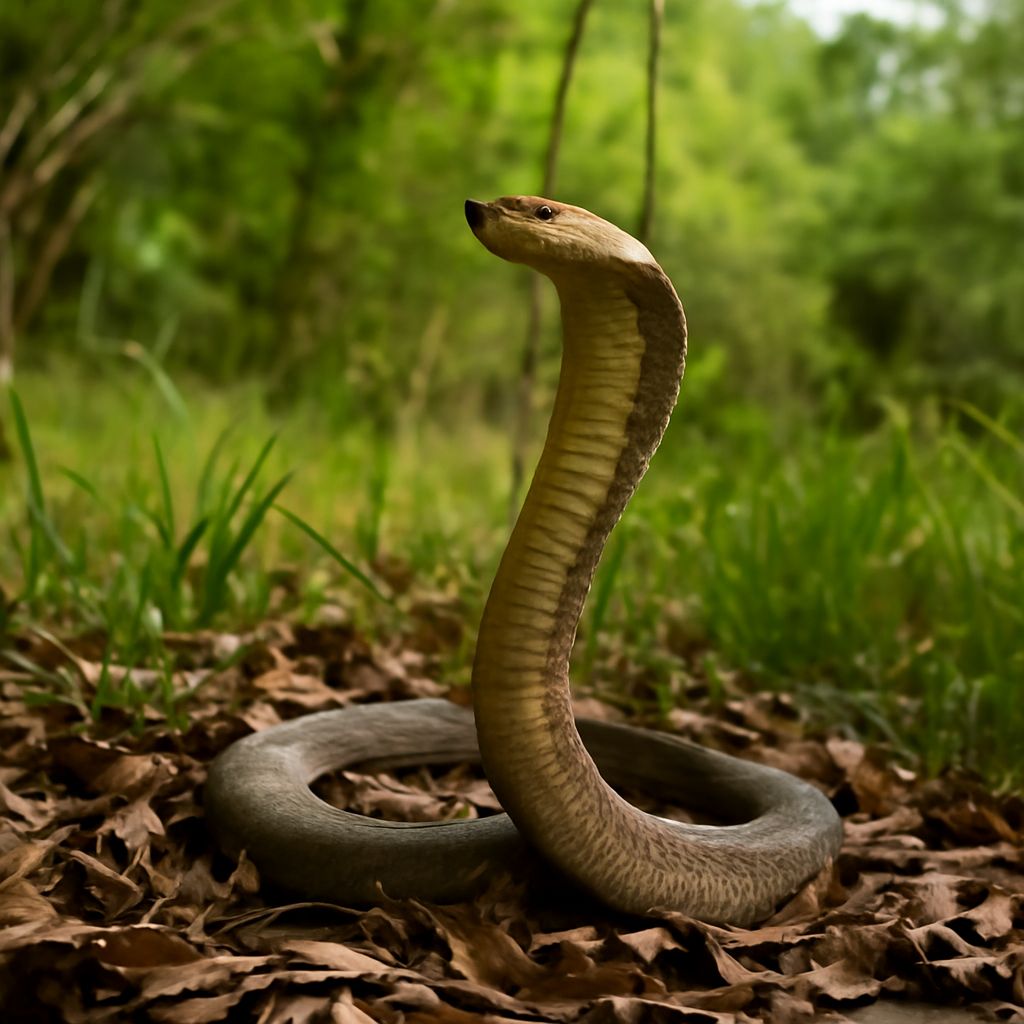
A hooded snake pictured in an Asian forest and a snake seen on a Panamanian trail call for different identifications. The places king cobras inhabit are in Asia, not Panama. Once you know that geographic distinction, questions about how long a king cobra lives and what it eats become much easier to put in context.
Where the forests and streams meet
The broad king cobra range extends from parts of South Asia through Southeast Asia to western Indonesia and the Philippines. The Smithsonian’s National Zoo describes dense and open forests, bamboo thickets, mangroves, and nearby agricultural areas among its habitats. Streams are often part of the picture, providing settings with relatively consistent temperature and humidity.
That broad map describes king cobras in the traditional, wide sense. It does not mean they occur evenly across every country or island in the region. Forest cover, water, prey, and human land use shape conditions at a smaller scale. For a wildlife traveler, a country and habitat are useful first filters before comparing an animal’s physical features with a field guide.
A cobra habitat may be a forest edge as well as a densely wooded slope. The Smithsonian notes that these snakes can climb trees and shrubs, so their use of a landscape is not limited to the forest floor. A photograph taken beside water is an observation about that individual, not a promise that every similar stream contains one.
Ophiophagus, Naja, and the names in your guide
The king cobra belongs to the genus Ophiophagus, within the venomous snake family Elapidae. The broader common name “cobra” is used for several groups, including Naja. The Queensland government’s cobra assessment distinguishes Ophiophagus from Naja, a genus of typical cobras. A hood and a familiar common name do not make them the same genus.
Older guides often use Ophiophagus hannah for king cobras across their broad Asian distribution. A 2024 taxonomic revision recognizes four species: O. hannah in a narrower northern and Indochinese range, O. bungarus in the Sunda region, O. kaalinga in India’s Western Ghats, and O. salvatana on Luzon. The revision builds on anatomical comparisons and genetic research; not every older reference uses the split. When reading about a particular population, check the publication date and the geographic meaning of the name.
Size, hood, and color
How big do king cobras get? The Smithsonian gives an average length of 10 to 12 feet and an upper length of about 18 feet for the broadly defined group. That upper figure is exceptional; a guide’s maximum should not be treated as the size of a typical individual. These lengths also do not automatically describe each newly recognized species separately.
Adults vary in color and pattern across the range. A king cobra can raise the front of its body and spread a relatively narrow hood when threatened. Young animals can look different from adults, and regional variation complicates a quick identification. Size and a hood are useful context, but an observer should not approach a snake to check either feature.
If you are comparing pictures, note the location and the whole animal when a safe, existing photograph permits it. Pattern and scale details can matter to specialists, but a distant or partial image may not support a confident species identification. Leave an unknown snake space and use a local expert or field guide for the area.
A snake that often eats other snakes
The scientific name Ophiophagus refers to snake eating. Other snakes form a substantial part of the diet, including species such as rat snakes and pythons in the Smithsonian’s account. King cobras may also take other prey. Their long bodies and flexible jaws help them consume prey whole; the meal is then digested over time.
This feeding relationship helps explain why the presence of suitable prey matters alongside cover and water. A forest is a living network of predators, prey, and shelter rather than a backdrop behind one impressive animal. It also means that a cobra’s food choices do not make it safe to disturb: it can defend itself when threatened.
King cobra lifespan: what the records tell us
The Smithsonian reports that these snakes can live about 20 years in the wild. Treat that as an approximate figure in its broad species account, not a guaranteed lifespan for every individual. Wild animals are difficult to follow for their entire lives, and conditions vary across habitats.
For a documented figure under human care, the AnAge longevity database lists a maximum of 22.5 years in captivity for O. hannah, citing a collection record. The database labels its sample tiny. A maximum from a small captive sample is neither an average nor a direct estimate of survival in the wild; its older name may also predate the recent taxonomic split.
A nest among forest leaves
Female king cobras are notable for building nests from vegetation and laying eggs within them. Nest sites and breeding behavior add another reason to leave a snake and its surroundings undisturbed. At a distance, the combination of forest cover, prey, and a suitable place for eggs tells a richer story than a dramatic image of a raised hood alone.
For a trip in Panama, use a regional wildlife guide for the actual local snakes you may encounter. The Asian king cobra offers a fascinating comparison in forest ecology, while a location-specific identification keeps your observations grounded in the place you are visiting.