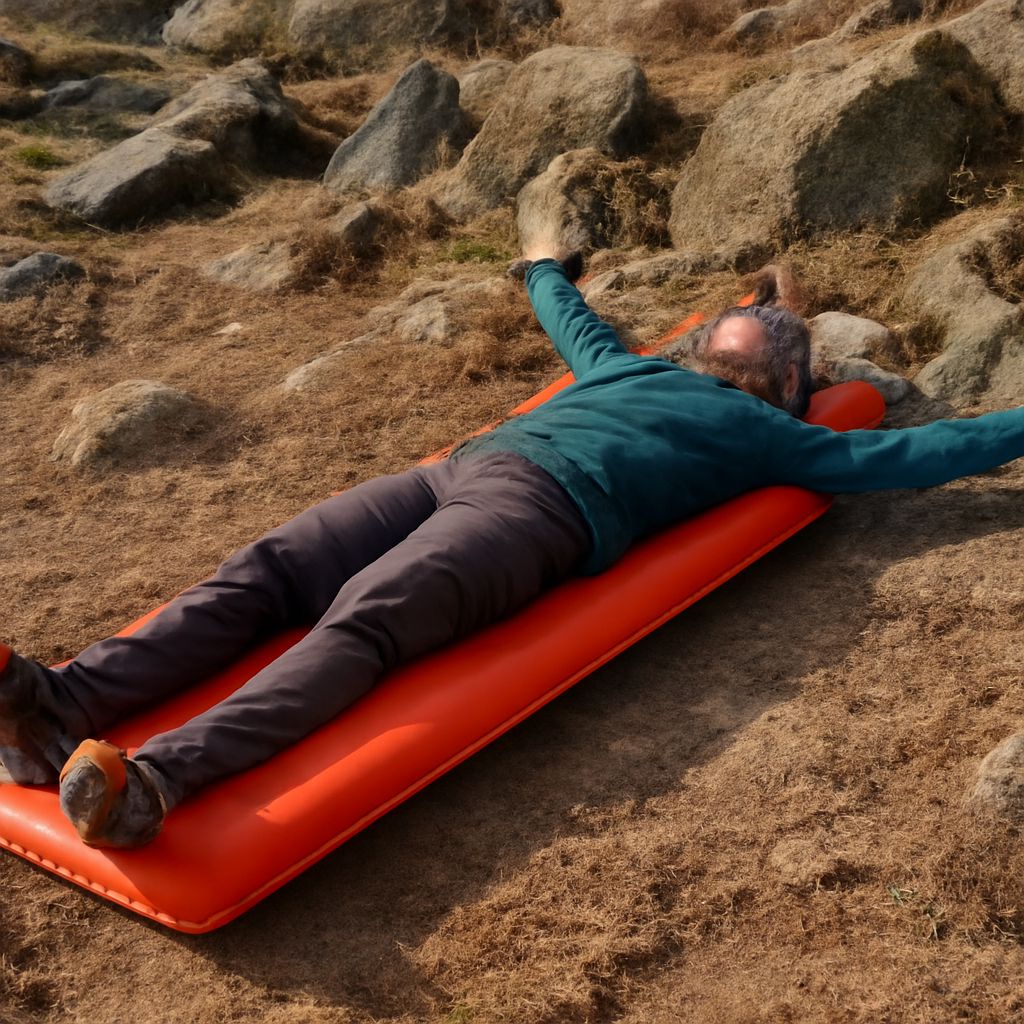
Sleep more comfortably and lose less heat to the ground by choosing a sleep mat that suits your campsite and your body. A good camping mattress with padding gives your hips room to settle and fits inside your tent without crowding your gear.
Start with the lowest temperature you expect, then weigh comfort against what you can carry. A drive-in campsite near Santa Fe gives you more room for a bulky mattress than a hike into the mountains. In either setting, insulation matters as much as cushioning.
Camping mattress pad options: air, self-inflating, and foam
The three common designs make different tradeoffs. Compare actual specifications, since weight and insulation vary within each type.
- Air pads use air chambers for cushioning and often pack small. Insulated versions add materials or internal construction to slow heat loss; an uninsulated model may be comfortable in warm weather but inadequate on cold ground. They need inflation and can puncture. Thickness is appealing for side sleepers, but check the packed weight and R-value as well.
- Self-inflating pads combine compressible open-cell foam with an airtight shell. Open the valve and the foam draws in air; you may still need to add a few breaths or use a pump for your preferred firmness. They generally pack larger than comparable air models, but the foam adds cushioning and insulation. A leak still requires attention.
- Closed-cell polyethylene foam pads roll or fold without a valve. They are lightweight, durable, and ready as soon as you put them down. Their bulk can be awkward on a backpack, and their relatively firm, thin surface may be uncomfortable on rough ground. They also provide a reliable backup under an inflatable model.
A camping mattress pad for a car trip can be thick and spacious if the packed bundle fits your vehicle. For a walk-in camp, compare camping sleep mats by their complete packed weight, including any pump and repair kit, and see whether the bundle fits inside or securely outside your pack.
Read R-value alongside your sleeping bag
R-value describes resistance to heat flow through the pad. A higher number means more insulation from the ground. It is not a temperature rating: an R-value of 3 does not mean a pad is rated to 3 degrees. Look for a value measured using the standardized ASTM test when comparing products.
Your bag and pad do different jobs. The bag retains warmth around your body, while the layer beneath you limits heat loss to the ground where the bag’s insulation is compressed. Clothing, shelter, wind, and your own comfort also affect the night. Choose a bag appropriate for the forecast low, then choose ground insulation with a margin for the conditions and how cold you tend to sleep.
As a broad guide, REI’s buying advice places R-values below 2 in warm-weather territory and 2 to 3.9 in cool-weather territory. A colder forecast calls for more insulation. The values of two pads placed directly on top of one another can be added: foam rated 2 under an inflatable rated 3 gives a combined value of about 5. Check each rating before relying on that combination.
Fit the pad to your body and tent
Length and width affect both sleep and packing. A short model saves weight but leaves your legs on another surface; a longer one keeps your whole body supported. Check that your elbows stay on the pad when you lie on your back. If you turn often, a wider rectangular shape gives you more room than a tapered one, but it occupies more tent floor.
Thickness is a comfort measure, not a reliable measure of warmth. Lie on your side in your usual position and check whether your hip touches the ground. Release a little air if the surface feels too firm, while keeping enough support to prevent bottoming out. A sleeping mat for camping should also fit with your partner’s gear and leave access to the door.
A padded mattress for camping should suit the surface and space you have. Before buying, compare inflated dimensions with the usable floor width, especially where the tent walls slope inward. For a two-person trip, sketch both pads side by side. Two wide models may not fit even when the tent is sold for two people.
Inflate, protect, and repair
Clear sharp stones and sticks before pitching, and use the tent floor or a suitable groundsheet between the pad and the earth. A pump sack can reduce moisture introduced by breath and saves effort on a large air model. Follow the valve instructions and avoid overinflating; air expands as temperatures rise.
Carry a compatible patch kit and learn how it works before the trip. If a pad loses air, check the valve first. To locate a small hole, use soapy water where practical and look for bubbles, then dry the area thoroughly. Apply the patch as directed and allow the recommended cure time. A damaged seam or valve may need professional repair or replacement. A foam pad for sleeping underneath can provide some insulation while you deal with a leak.
After a humid trip, wipe away dirt, dry the outside fully, and follow the maker’s cleaning and storage instructions. Do not put a damp pad away for months. Check for leaks at home so there is time to repair them before the next outing.
Choose for the trip ahead
For a hike, an insulated air model offers a compact package if you accept the need for careful handling and repair. For a vehicle-based camp, a self-inflating model can offer a roomy, cushioned bed without demanding as much packing discipline. Choose foam when simplicity and puncture resistance matter most, or pair it with another pad for extra insulation.
A sleeping pad for camping should match the coldest ground you expect, your sleeping position, and the space available in your tent. For a damp mountain night, keep your bag dry and bring enough insulation for the forecast. Pick the camp sleeping pad you can carry comfortably and set up with confidence.