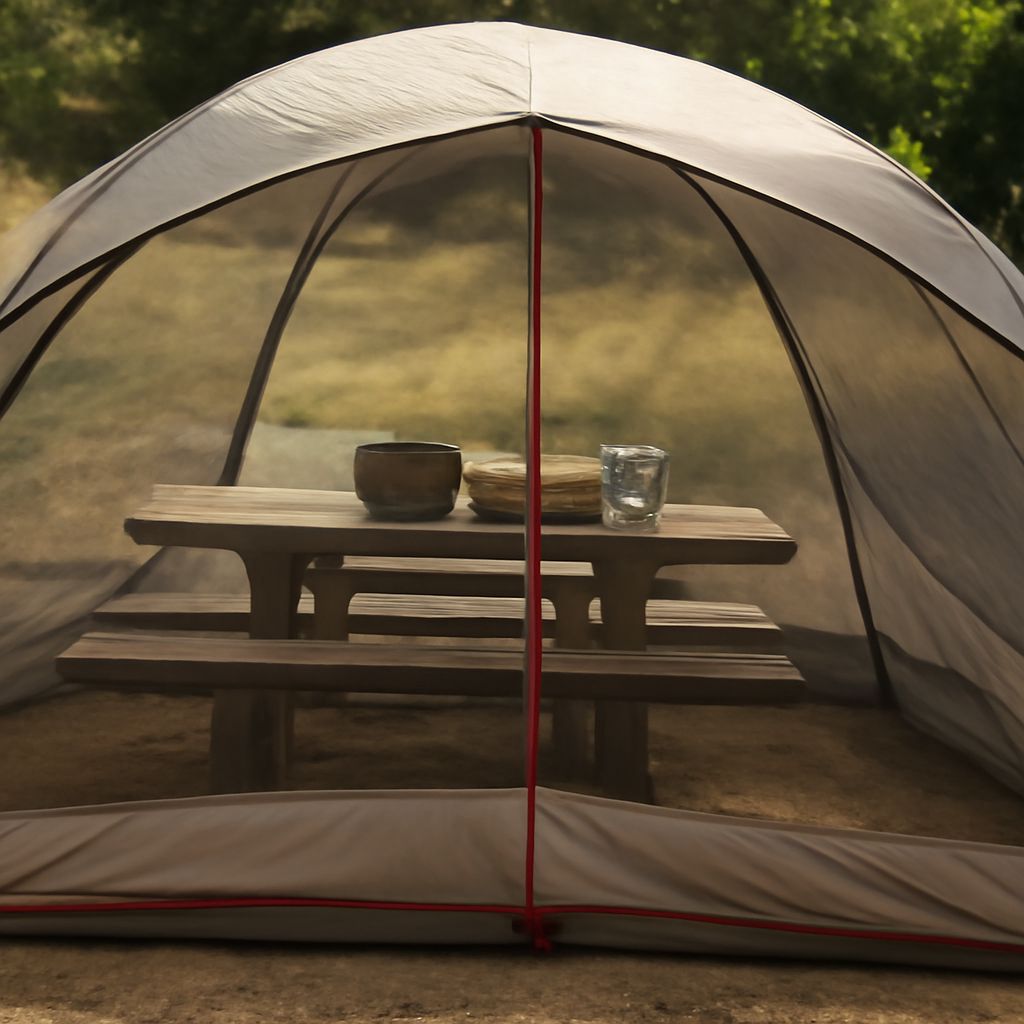
A mesh shelter gives your group a place to eat, play cards, and sit together while insects stay outside. A tent with screened walls can turn a picnic table into a more comfortable evening gathering spot without shutting out the breeze.
For a screened-in camping space, choose the size around your chairs and the way people move, then look closely at the doors, floor, and weather protection. In Panama’s damp mountain conditions, you also need a practical way to dry and pack the shelter after a wet stay.
Screened in tent layouts: Make room for people and gear
Start with the furniture you will actually bring. Manufacturer dimensions describe the footprint, not the clear space at chair height. Sloping walls, support poles, and rounded corners can reduce the area where people can sit comfortably.
For four people, picture four open chairs around your table, with space to stand and walk behind them. Mark the shelter’s dimensions on the ground at home and arrange the furniture inside that outline. Add a cooler or a child’s chair if it will share the space. A tall person should also check the peak and sidewall heights: a high center does not mean you can stand upright near the edge.
A screened in tent that fits a table tightly may work for meals but feel crowded during a long rainy afternoon. For a larger group, extra floor area and a second entrance can make movement easier. If only two people will use it, a smaller footprint can be quicker to pitch and easier to fit on a campsite.
Check the mesh and entrances
Look for fine, continuous mesh across the walls and inspect the joins around the roof, door, and corners. Smaller openings can help exclude small biting insects, although fine mesh can also restrict airflow. Compare the manufacturer’s mesh specification when available; a product described only as “bug proof” tells you little about the size of its openings.
A zipper should run smoothly and close all the way to the ground or floor. A door that can be opened and shut with one hand is handy when you carry plates. Two doors give a group more flexibility, but they also create another opening to manage. Teach everyone to close the entrance immediately, and check for gaps or torn mesh before each trip.
Even a well-closed screened tent will be opened throughout the day. Bring repellent for time outside and follow its label. The CDC’s travel guidance also recommends protective clothing and screened accommodation or mosquito nets when appropriate.
Decide whether you need a floor
Many screen tents for camping have open bottoms. They can go over an existing picnic table, let you walk in with muddy shoes, and are relatively easy to sweep out. But insects can enter wherever the lower edge lifts from uneven ground. Some models have skirts you can weigh down or stake according to their instructions.
An attached floor closes that gap and provides a cleaner surface for bags or a child playing on the ground. It can collect water and mud, though, and chair legs may damage the fabric. Check whether the doorway has a raised threshold, particularly if someone needs an easier entrance. A removable floor offers flexibility, but examine how securely it joins the walls before relying on it to limit insects.
Plan for rain, wind, and ventilation
Mesh lets air move through the shelter, which is welcome in humid weather. It also lets wind-driven rain through. A solid roof may shade a table and handle a light shower, but roof coverage and water resistance vary by model. Look for an extended overhang or compatible rain panels if you expect showers; check whether panels cover the direction from which rain is likely to blow.
Closing panels reduces airflow and can make the interior feel stuffy. In sustained rain, a separate, properly pitched tarp may give broader cover if the site and shelter instructions permit it. Keep runoff away from the entrance and avoid placing the shelter in a hollow where water collects.
A camping screen tent is a shared daytime and evening space, not a substitute for a weather-rated sleeping tent. Anchor it with the supplied stakes and guylines, following the instructions. Large mesh walls can still catch gusts, especially with panels attached. If strong winds or a storm are forecast, take the shelter down rather than leaving it exposed. Never cook or use a fuel-burning appliance inside an enclosed shelter: fire and carbon monoxide are serious hazards.
Match setup and packed size to your trip
Pop-up and hub designs can be convenient for one or two people, while pole-based shelters may take longer but pack into a different shape. Practice once at home, including folding it back into the bag. Check the packed length against your vehicle’s cargo space and the weight against the distance from parking to your pitch. A screened-in shelter with a large carry bag is easier to transport beside a car than along a trail to a remote campsite.
Bring suitable stakes for the ground you expect and know which attachment points need guylines. On a wet mountain trip, pack a separate bag for damp fabric. At home, open the shelter and dry it fully before storage to reduce mildew and odors. Brush off grit and let zippers dry before packing it away for the season.
Choose for your group
Compare screen rooms for camping by the space you can actually use, not just the number printed on the package. A couple traveling light may prefer a compact mesh shelter with one easy door. A family eating around a table may value more headroom, two entrances, and a floor that closes securely.
For a base camp near Santa Fe, consider how much rain cover you can add, where the shelter will drain, and whether your group can set it up on the available ground. Choose a camping shelter with screens that fits your furniture and your transport, then carry separate sleeping protection suited to the forecast.