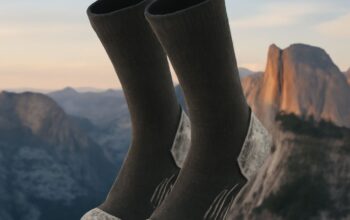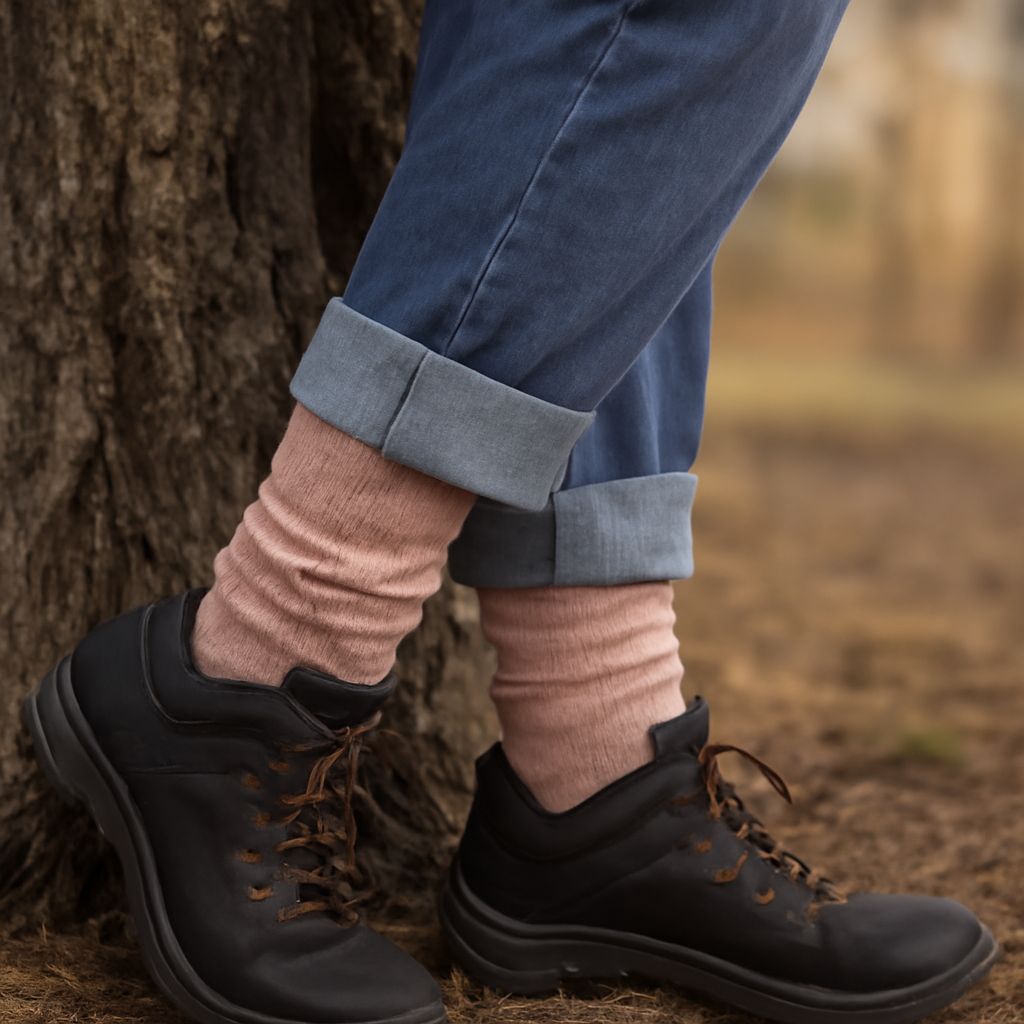
Choose hiking socks and footwear as one fit system, not as separate purchases. Start with the route: women’s hiking boots suit rugged terrain, heavier loads, wet conditions, and extra protection, while women’s hiking shoes suit lighter routes where flexibility, lower weight, and faster drying matter.
The best choice is the combination that holds the heel, leaves usable toe room, accommodates normal foot swelling, and stays comfortable with the intended sock thickness. A women’s size label alone does not guarantee the right last or width.
Hiking Socks: Choose Footwear by Terrain and Trail Conditions
Match the footwear to the demands of the route before adjusting sock weight. Consider terrain, pack weight, weather, surface grip, and how quickly the footwear needs to dry.
Women’s Hiking Boots: Support, Traction, and Protection
Hiking boots generally provide a more structured platform, deeper lugs, and greater protection from rocks, mud, roots, and cold conditions. They are the stronger choice for rough trails, extended trips, off-trail travel, or a loaded pack. The upper and sole can resist abrasion better than a lightweight shoe, but the trade-offs are more weight, less flexibility, and slower drying after soaking. Boots should not be selected solely for ankle height: midsole firmness, heel hold, and outsole traction also determine stability.
Women’s Hiking Shoes: Flexibility, Traction, and Faster Drying
Hiking shoes are usually lighter and more flexible, making them suitable for maintained trails, day hikes, warm weather, and hikers who prefer a natural stride. Mesh or thinner uppers often dry faster than boot materials, although they provide less protection against sharp rocks, deep mud, and cold water. Their traction can be excellent when the outsole matches the surface, but a flexible shoe may feel less secure under a heavy pack or on uneven ground. Choose a shoe when reduced weight and quick drying outweigh maximum structure.
Fit Women’s Hiking Footwear for a Secure, Swelling-Friendly Fit
Fit the complete setup with the socks and insole intended for the trip. Feet often expand during long walks and warm weather, so a comfortable indoor fit can become restrictive on the trail.
Check Heel Hold, Toe Room, Width, and Swelling Allowance
- Heel hold: Lace the footwear firmly across the instep. The heel should stay mostly in place when walking uphill, with no repeated lifting or rubbing.
- Toe room: Toes should not touch the front during a downhill walk. They should also be able to spread and move without pressing against the upper.
- Width: The forefoot should not feel squeezed at the little toe, bunion, or instep. More length does not correct a narrow last, and a wide fit should not allow the foot to slide sideways.
- Swelling allowance: Leave enough volume for modest expansion without creating a loose heel. Test the fit late in the day, after walking, and with the sock cushion that will be worn outdoors.
Try both feet, since they may differ in length or width. Walk on an incline and decline, bend the knees, and test the lacing at different tensions. Numbness, pressure points, or persistent heel movement indicate a last, width, or volume problem rather than a break-in issue.
Match Hiking Socks to Footwear Volume and Conditions
Socks change the internal fit as much as an insole does. Select fabric and cushion together with the footwear, weather, moisture level, and trip duration.
Choose Wool, Synthetic, or Blended Fabrics
Merino wool helps regulate temperature and manage odor while remaining comfortable across changing conditions. It is useful for cool weather, multi-day trips, and footwear that dries slowly. Synthetic fibers such as polyester or nylon typically dry faster and can be a practical choice for warm, wet routes or shoes designed to drain moisture quickly. Blended socks combine durability, drying performance, and temperature control. Cotton is less suitable for long or wet hikes because it holds moisture against the skin and can increase friction.
Adjust Cushion for Heat, Moisture, Weather, and Trip Duration
- Thin cushion: Works well in warm weather, close-fitting shoes, and short outings. It preserves interior volume and can improve drying speed.
- Medium cushion: Offers a versatile balance of protection, moisture control, and comfort for day hikes and variable conditions.
- Heavy cushion: Adds warmth and impact absorption for cold weather, rough terrain, and longer trips, but requires enough boot volume to avoid compression.
Use a thinner sock if the footwear already fits closely or if feet run hot. Use more cushion only when the heel remains secure and toes still have room. For wet conditions, prioritize a fabric that dries within the trip’s recovery time; a thick, saturated sock can occupy more space and create pressure even when the footwear initially fits.
Test the Complete Fit System Before a Long Trail
A short fitting session cannot reveal every problem. Test the footwear, socks, lacing, and insole together before committing to a long hike.
Use Short Walks, Downhills, and Realistic Trail Conditions to Find Hot Spots
Begin with several short walks, then add stairs, slopes, and a downhill section. Wear the pack weight and sock combination expected on the trip. Check for heel slip, toe contact, bunching, dampness, and pressure after 30 to 60 minutes, then repeat in the weather and terrain most similar to the route. A hot spot that appears early usually becomes a blister or pressure injury later. Change the sock thickness, lacing, or footwear only after identifying the source, and do not take the setup on a long trail until it remains secure and comfortable through repeated tests.