A tiny gray butterfly lands on a flower at the edge of a trail, folds its wings, and reveals a bright orange mark near a threadlike tail. You have just enough time for a photograph before it moves on. Is this gray-winged, streak-marked butterfly Strymon melinus? Look at the whole pattern, then use the location and plant as clues.
Gray hairstreak butterfly: the field marks to photograph
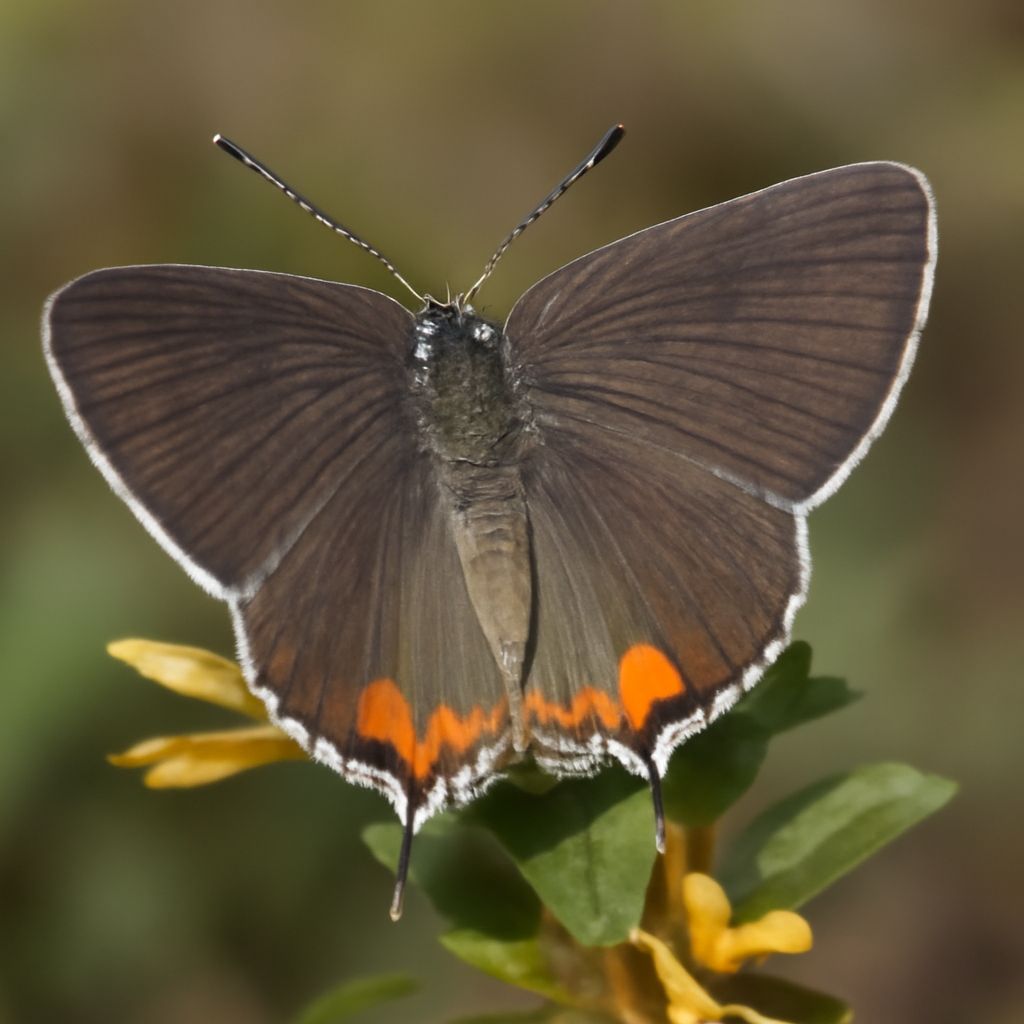
A gray hairstreak butterfly has a wingspan of roughly 7/8 to 1 3/8 inches, according to Butterflies and Moths of North America. The upper wings are blue-gray, with a conspicuous red-orange spot near the hindwing tail. The underside is gray, sometimes darker in spring and fall and paler in summer. A fairly straight pale line, edged with orange on its inner side, crosses the underside.
The little tail and orange spot draw your eye to the back of the wing. Try to photograph the underside with the wings closed, then the upper surface if the insect opens them. A clear side view gives you the line, ground color, spot, and tail in one frame; a top view adds another angle for comparison. Note the size and location too, since other small butterflies can share a similar silhouette.
You may also see the spelling grey hairstreak butterfly in a guide. The color word changes with the writer’s convention; compare the scientific name and wing pattern to make sure the guide is discussing the same species. A photograph of a grey-streaked butterfly is most helpful when the markings are sharp enough to examine, rather than just a blur of color against a leaf.
Strymon or Callophrys: what the names tell you
Strymon and Callophrys are different butterfly genera, or groups of related species. The Integrated Taxonomic Information System lists Strymon melinus as a valid name; it lists the juniper species separately as Callophrys gryneus. Shared family traits or a similar common name do not make those scientific names interchangeable.
When comparing field guides, use both parts of the scientific name. The first identifies the genus; the second identifies the species within it. Classification can be revised, so a database and an older book may use different combinations. Keeping the source and date with your observation makes that difference easier to follow later.
Where it ranges and where to look
The University of Michigan’s Animal Diversity Web describes a range from southern Canada through Central America to northwestern South America. That is a broad regional picture, not a record for every mountain or trail within it. For a Panama trip, treat a local sighting as an identification to document and compare with verified regional records.
In North America, this gray-winged, streak-marked butterfly uses open, weedy places, gardens, roadsides, and woodland edges. On a walk, pause at sunny vegetation and flowering plants along an opening. Watch from a comfortable distance: a patient observer often gets a better look than someone pursuing a butterfly through a patch of prickly plants.
From egg to caterpillar
The female lays individual eggs on host-plant flowers. Look closely at a bud or flower rather than expecting a cluster of large eggs. The Alabama Butterfly Atlas describes the eggs as greenish white, dimpled, and disc-shaped, often laid on or near a bud.
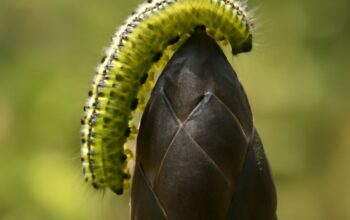
Once it hatches, the caterpillar feeds on the plant. Young larvae eat flowers and fruits; older ones may also eat leaves. Their color varies: the Alabama guide describes shades of green related to the host’s hue, while the Missouri Department of Conservation also notes grayish or reddish-brown larvae with pale slanting side stripes. A small, flattened caterpillar tucked into a flower can be much harder to notice than the adult.
A host plant feeds the caterpillar; a nectar plant supplies an adult with food. One plant can serve both roles, but seeing an adult visit a flower does not establish that its young can develop there. If you find a possible larva, photograph it on the plant and record the plant’s flowers and leaves as well.
The chrysalis and the next generation
After feeding and growing, the caterpillar becomes a chrysalis, the pupal stage in which it transforms into an adult. The Alabama atlas describes this stage as bean-shaped and mottled brown or green with dark speckles. It is easy to overlook among plant material, so leave a suspected chrysalis undisturbed and observe it where it is.
In parts of the species’ North American range, the chrysalis is the overwintering stage. Adults emerge, find nectar, and reproduce; the number and timing of generations vary by region. Northern populations may have two flights from May through September, while southern populations may have three or four between February and November, according to Butterflies and Moths of North America. Those seasonal schedules describe those regions, and should not be transferred automatically to a particular Panamanian site.
Plants that support different stages
Caterpillars use a wide range of plants, especially members of the pea and mallow families. Examples listed by Butterflies and Moths of North America include beans, clovers, cotton, and mallows. Adults visit flowers for nectar, including milkweed, mint, and goldenrod in the regions covered by that guide. The exact plants available will depend on the place.
For a field note, write down whether you saw an adult taking nectar, a female laying an egg, or a caterpillar feeding. These observations answer different questions about the plant’s role. Add the date, habitat, and a photograph of the insect alongside the plant: together they give a local expert far more to work with than a color description alone.