Decomposers in the tropical rainforest keep nutrient cycling moving even though warm, rain-soaked conditions can quickly break down dead material. Tropical rainforests are concentrated around the equator, but they are not one uniform ecosystem. Their soils, seasons, elevation, plant communities, and animal populations vary by region. A visitor therefore needs both a broad biome map and a local understanding of forest layers and ecological relationships.
The living community is closely connected: plants capture sunlight, animals pollinate flowers or disperse seeds, and fungi, bacteria, and detritivores return nutrients to the soil. Panama offers a useful example of these relationships, while the wider rainforest biome includes several distinct regions across the Americas, Africa, Asia, and the Pacific.
Where Tropical Rainforests Occur: A Map of Tropical Rainforest Regions
A map of tropical rainforest regions shows a broad belt between the Tropic of Cancer and the Tropic of Capricorn, with the largest areas near the equator. The main concentrations are the Amazon Basin and neighboring parts of Central America, the Congo Basin and other central African forests, and Southeast Asia. Smaller but important rainforests occur in Madagascar, northeastern Australia, and many tropical islands.
Rainfall is the defining broad condition, but distribution is shaped by mountains, ocean currents, seasonal winds, and drainage. Some forests receive rain throughout the year, while others have a pronounced wet and dry season. Montane rainforests may be cooler, cloudier, and shorter than lowland forests. Forests on islands can also contain species found nowhere else.
Panama illustrates this regional variety. Its Caribbean-facing slopes generally receive more rain than parts of the Pacific side, while the Darién contains extensive lowland forest. Areas near the Panama Canal combine mature forest, streams, and disturbed edges, allowing visitors to observe different habitats within a relatively small country.
- Lowland rainforests: Hot, humid forests with tall canopies and heavy rainfall.
- Montane rainforests: Forests at higher elevations, often rich in mosses, ferns, and epiphytes.
- Seasonal rainforests: Wet forests that experience a predictable dry period and may include deciduous trees.
A global biome map shows where suitable rainforest conditions occur; it does not show the range of every rainforest species. Local maps and habitat information are needed to understand whether a particular orchid, monkey, frog, or tree occurs at a specific site.
Rainforest Layers and Types of Plants in the Rainforest
The vertical structure of a rainforest divides sunlight, moisture, wind, and living space among several layers. The emergent layer contains the tallest trees, the canopy forms a nearly continuous roof, the shaded understory holds smaller trees and shrubs, and the forest floor receives the least direct light. These layers help explain the types of plants in the rainforest and the adaptations found in each zone.
Emergent and canopy trees compete intensely for light. Many grow straight and tall, produce broad crowns, and support buttress roots that stabilize them in shallow, heavily weathered soils. Canopy leaves often have waxy surfaces and pointed drip tips, which help shed frequent rain. Some trees produce fruits or flowers high above the ground, where birds, bats, and climbing mammals can reach them.
Common plant forms include:
- Trees: Woody plants that create the canopy and provide nesting, feeding, and climbing sites.
- Vines and lianas: Climbing plants that use established trunks as support instead of investing in thick, self-supporting stems.
- Epiphytes: Orchids, bromeliads, and other plants that grow on branches without taking nutrients directly from their host.
- Ferns, palms, and shrubs: Plants suited to filtered light in the understory or lower layers.
Understory plants often have large, thin leaves that capture limited light efficiently. Some seedlings remain dormant for years until a fallen tree creates a bright gap. Other tropical rainforest plant adaptations respond to water rather than light: shallow spreading roots quickly absorb nutrients and moisture near the surface, while climbing stems help leaves reach brighter positions.
Soil fertility can be surprisingly limited despite abundant growth. Heavy rainfall may wash soluble minerals downward, and rapid decomposition keeps much of the available nutrient supply in living biomass, leaf litter, and the thin upper soil layer. This is why roots, fungi, and litter are as important to plant growth as rainfall itself.
Flowers in the Rainforest and Animal Survival Strategies
Flowers in the rainforest are adapted to attract particular pollinators in a crowded, layered habitat. Bright red, orange, or yellow flowers may be visible to hummingbirds, sunbirds, or other nectar-feeding birds. Strong scents can guide bees and moths through dim vegetation, while large, night-opening flowers may attract bats. Orchids can mimic insect shapes or scents, and some plants place nectar where only a specialized pollinator can reach it.
Flowers do not always grow at the ends of exposed branches. Cauliflorous trees produce blossoms directly on trunks or large limbs, making them accessible to bats, climbing mammals, and insects. Heliconias, passionflowers, and many palms illustrate different combinations of color, shape, scent, and nectar. After pollination, fleshy fruits often feed animals that carry seeds away from the parent plant.
Tropical rainforest animal adaptations reflect the same limits of light, space, food, and movement. Many species specialize in one layer rather than using the entire forest. Examples include:
- Arboreal movement: Spider monkeys use long limbs and prehensile tails, while sloths use hooked claws to hang from branches.
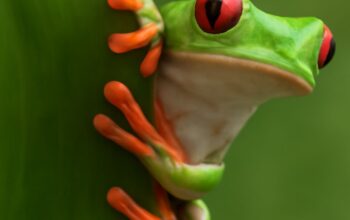
- Camouflage: Leaf insects, tree frogs, and jaguars use patterns or colors that break up their outlines among leaves, bark, and dappled shade.
- Specialized feeding: Toucans use large bills to reach fruit, and nectar-feeding birds have bills suited to particular flowers.
- Defensive traits: Some poison dart frogs obtain toxins through their diet, while armored insects, chemical sprays, and warning colors deter predators.
These tropical rainforest animal adaptations also help species avoid competition. A fruit-eating bird in the canopy may use different food and nesting sites from a ground-dwelling mammal. Bats can pollinate flowers at night, when many birds and insects are inactive. In Panama, visitors may see sloths and howler monkeys in the canopy, leafcutter ants on the forest floor, and frogs or insects around humid streams, each occupying a different ecological opportunity.
Decomposers in the Tropical Rainforest: Fungi, Bacteria, and Detritivores
Fungi, bacteria, and detritivores convert dead leaves, fallen branches, animal waste, and carcasses into simpler materials. Detritivores physically fragment this material, while fungi and bacteria chemically break down compounds such as cellulose, lignin, and proteins. Their activity is especially rapid in warm, moist rainforest conditions, although thick or chemically defended leaves can decompose more slowly.
Fungi are visible as mushrooms, molds, and bracket fungi on rotting wood, but most fungal activity occurs through microscopic threads in soil and litter. Mycorrhizal fungi form partnerships with living roots: the plant supplies sugars, and the fungi improve access to water and minerals, including phosphorus. Other fungi attack dead wood and release nutrients that plants can eventually absorb.
Bacteria continue decomposition in soil, wet leaf litter, and decaying organic matter. They help transform nitrogen-containing compounds into forms that plants and other organisms can use. Detritivores make this process more effective by shredding material and mixing it with soil.
- Termites consume wood and rely on microorganisms in their digestive systems to process tough fibers.
- Millipedes and some beetles shred leaves and woody debris into smaller pieces.
- Earthworms and springtails mix organic fragments with soil and increase the surface area available to microbes.
- Fungi and bacteria complete much of the chemical breakdown and release mineral nutrients.
The resulting nutrient cycle is fast but not wasteful. Nutrients move from living plants to litter, decomposers, soil, and new roots. In a Panama forest, a fallen leaf may be colonized by fungi, shredded by invertebrates, and incorporated into soil before the next season of growth. Without these decomposers, nutrients would remain locked in dead material, limiting the plants that support the rest of the rainforest community.