Plants in the jungle are shaped by a constant struggle for light, water, space, and nutrients. Their roots, leaves, stems, and growth habits help them live in a forest where heavy rain moves through the canopy, the soil may be shallow, and neighboring organisms compete intensely.
Animals face the same pressures in different ways. Camouflage, climbing, specialized feeding, and carefully timed life cycles help them find food, avoid predators, and use the forest’s distinct layers. These adaptations also connect animals with plants through pollination, seed dispersal, shelter, and food.
Conditions That Shape Life in the Jungle
A tropical rainforest is vertically layered. The emergent trees and upper canopy receive the strongest sunlight, while the understory gets filtered light and the forest floor may remain dim even during the day. This uneven light supply determines where plants can grow and where animals search for food.
Rain is abundant, but usable nutrients are not always evenly distributed. Water can wash nutrients from exposed soil, while dense plant growth quickly absorbs nutrients released by decay. Many trees therefore rely on shallow, spreading roots and partnerships with fungi to improve nutrient uptake.
Competition also occurs above ground. Plants climb toward open light, spread leaves into gaps, or grow on other plants without taking nutrients directly from them. Animals divide the habitat by height, diet, and activity time, reducing competition between species that use different parts of the forest.
Plants in the Jungle: Structures From Floor to Canopy
Buttress roots are structural adaptations found in some large rainforest trees. Wide, flared roots extend from the trunk and help stabilize tall trees in shallow soil. They also spread through the upper soil layers, where decaying leaves and other organic material provide nutrients.
Broad leaves are common in shaded plants because a large surface can capture limited sunlight. Many have pointed drip tips or ridged surfaces that help rain run off quickly. This reduces the time water remains on the leaf and helps limit fungal growth.
Epiphytes, including some orchids, ferns, and bromeliads, grow on branches or trunks to reach brighter conditions. They are not automatically parasites. Instead, many collect water from rain, leaf litter, or specialized leaf structures. A bromeliad’s water-filled leaf base can also become a small habitat for insects and other organisms.
Lianas are woody climbing plants that use trees as support. Rather than investing heavily in thick, self-supporting trunks, a liana may anchor in the ground and climb toward the canopy with flexible stems. Once above the shaded understory, it can produce leaves and flowers in brighter conditions.
These examples show structural adaptations: physical features that improve survival. Plants also have behavioral or growth responses, such as directing shoots toward gaps in the canopy. Life-cycle adaptations include flowering or producing fruit during periods when particular pollinators or seed dispersers are most active.
Animal Adaptations in the Tropical Rainforest: Food, Movement, and Defense
The most visible animal adaptations in the tropical rainforest help animals move through layered habitat and locate food. Some monkeys have grasping hands and feet, while certain species also use prehensile tails to steady themselves on branches. Sloths have curved claws that allow them to hang from limbs, conserving energy in the canopy.
Climbing is both a structural and behavioral adaptation. Strong limbs, claws, gripping feet, or flexible joints provide the physical ability, while choosing a particular route through vines and branches reflects learned behavior. Arboreal animals may remain high above ground, whereas others descend to the understory or floor to feed.
Specialized feeding reduces competition. A toucan’s large bill can help it reach and handle fruit, while some leaf-eating mammals have complex digestive systems and microbes that help break down tough plant material. Nectar-feeding bats, birds, and insects use long tongues or mouthparts to reach flowers that are difficult for generalist feeders to exploit.
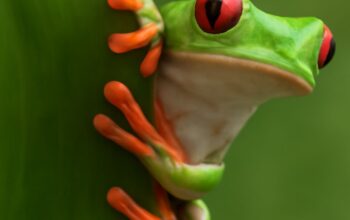
Camouflage is a major defense. Green tree frogs can blend with leaves, brown mammals may resemble bark, and patterned insects can disappear among shadows and moss. Some animals also use behavior, such as remaining motionless, moving at night, or copying a leaf’s shape. Bright warning colors, toxins, armor, and group vigilance provide other defenses in particular rainforest communities.
How Plants and Animals Depend on Each Other
Plants provide food in the form of leaves, nectar, fruit, seeds, and sap. In return, animals often transport pollen between flowers. Bees, moths, beetles, birds, and bats may each pollinate different plants, depending on flower shape, scent, color, and the time of day when nectar is available.
Seed dispersal is another important relationship. Fruit-eating monkeys, birds, and bats can carry seeds away from the parent plant and release them in droppings. This helps reduce crowding and may place seeds in a suitable patch of soil. Some plants depend heavily on particular animal groups for this movement, although those relationships vary among rainforest regions.
Plants also create shelter. Tree hollows provide nesting and resting sites, dense leaves conceal insects and birds, and bromeliad pools support aquatic larvae and small invertebrates. In turn, animals may prune vegetation, enrich soil with waste, or carry pollen and seeds into new areas. Adaptation is therefore not a collection of isolated traits: plant structures shape animal opportunities, while animal behavior helps plants reproduce and spread.