Start with the last shape and trail demand, not the logo. Hiking boot brands are useful shortlists: Salomon, Merrell, KEEN, Oboz, and La Sportiva each tend to balance foothold, comfort, protection, and traction differently. For women’s hiking boots, the best match is the one that holds the heel and leaves the toes room without pressure.
Lightweight hiking boots generally suit day hikes, fast-moving routes, and moderate loads, while heavier boots can make more sense for rocky terrain, cold conditions, or a loaded pack. Brand reputation narrows the field; foot shape, support needs, and outsole performance make the final decision.
How Hiking Boot Brands Differ By Last, Support, And Outsole: Salomon, Merrell, KEEN, Oboz, And La Sportiva
The last determines the boot’s internal shape. It controls heel width, midfoot hold, toe-box volume, and how securely the foot sits above the midsole. The same nominal size can feel substantially different between brands, and even different models from one brand may not fit alike.
- Salomon commonly uses a tapered heel and close midfoot with a moderate forefoot. Its responsive midsoles and Contagrip outsoles suit hikers who want a secure, relatively precise feel on mixed or uneven ground.
- Merrell often feels more forgiving through the forefoot, with cushioned, flexible midsoles. Moab models are practical for established trails and moderate loads; outsole rubber and waterproofing vary by version.
- KEEN is known for a broad, rounded toe box and a stable platform. Targhee models can accommodate wider feet, although a roomy front should not allow the foot to slide during descents.
- Oboz tends toward a structured fit, supportive footbeds, firmer midsoles, and deep-lug outsoles. That combination can suit hikers carrying more weight, but may feel too rigid for casual walks.
- La Sportiva commonly favors a narrower, lower-volume shape and precise foothold. Nucleo models are attractive for steep, rocky routes where edging and sticky traction matter more than maximum toe-box space.
These are brand tendencies, not guarantees. The model’s last, width option, upper material, and intended use still need checking in person or through a careful home fitting.
Why Lightweight Hiking Boots Trade Weight For Cushioning, Support, And Protection
Lower weight usually comes from thinner uppers, less rubber around the toe and heel, lighter foam, and a reduced or more flexible shank. The result is a boot that feels quicker, produces less swing weight, and can reduce fatigue over a long day. It may also dry faster when built without a waterproof membrane.
The trade-off is less underfoot insulation, rock protection, torsional stability, and long-term abrasion resistance. A flexible boot may be comfortable on maintained paths but allow a loaded foot to work harder on loose slopes. Waterproof versions add weather protection but normally increase heat, weight, and drying time after water enters over the cuff.
Support should match the load and terrain rather than the boot’s height alone. A mid-cut collar can help keep debris out and provide a more secure feel, but it does not replace a stable midsole or a well-fitting heel. For light packs and moderate trails, a flexible model may be sufficient; for rough ground or heavier loads, a slightly heavier, more structured boot can be the safer compromise.
Shortlist Women’s Hiking Boots By Foot Shape And Trail Use: Salomon X Ultra, Merrell Moab, KEEN Targhee, And La Sportiva Nucleo
- Salomon X Ultra: Start here for a narrow-to-average heel, a moderate forefoot, and a preference for close control. It fits mixed terrain, faster day hikes, and routes where a secure platform is more useful than a very soft step. Check that the forefoot does not compress the little toes.
- Merrell Moab: Consider this line for an average-to-wider foot that values cushioning and a forgiving upper. It works well for moderate day hikes and packed trails, but the more comfortable volume must still be controlled with lacing on descents.
- KEEN Targhee: A useful starting point for a broad forefoot or naturally splayed toes. Its protective construction suits rougher day hikes and moderate loads. It is a poor match if the heel feels loose or the foot slides forward despite tightening the laces.
- La Sportiva Nucleo: Consider it for a narrow, low-volume foot and steep, rocky terrain requiring precise placement. Its closer shape can reduce movement on technical ground, but hikers with a broad forefoot should not expect the upper to stretch enough to solve pressure.
Choose waterproof or non-waterproof construction separately from fit. A dry-climate hiker may prefer the lighter, more breathable version, while wet, cool routes may justify the extra membrane weight.
Run A Complete In-Store And At-Home Fit Test, Including Downhill Checks
- Prepare the test: Try both boots late in the day, when feet are slightly swollen. Wear the hiking socks and insoles intended for the trail. Compare both feet because they may differ in length or volume.
- Check standing space: With the heel seated, confirm roughly a thumb’s width between the longest toe and the front of the boot. Toes should wiggle, while the midfoot and heel remain held without numbness or pressure points.
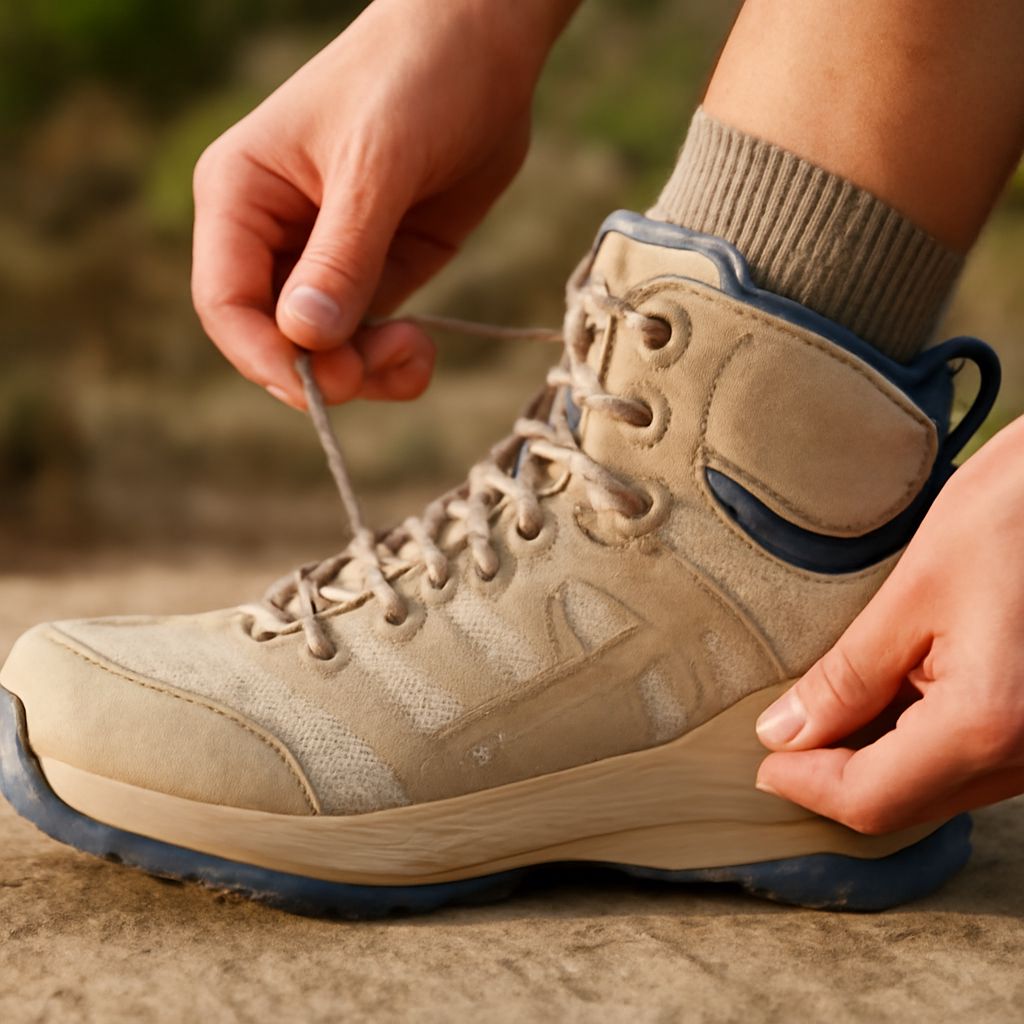
- Set the lacing: Lace firmly across the instep and use the top hooks or a heel-lock method if needed. The heel should lift only minimally when walking; excessive lift signals a mismatch, not a problem to solve by over-tightening.
- Walk and flex: Walk for several minutes, use stairs, and kneel or lunge. Look for creasing across the toes, hard edges at the ankle, arch pressure, or hot spots. The boot should flex near the forefoot without folding painfully into the toes.
- Perform the downhill test: Walk down a ramp, stairs, or a safe indoor incline. Toes should not repeatedly strike the front, nails should not feel compressed, and the heel should stay seated. If the foot slides forward, try a different size, width, last, or lacing system.
- Repeat at home: Wear the boots indoors for 20 to 30 minutes, then repeat the walk with the planned pack weight. Keep them only if pressure, slipping, and instability do not appear after the complete test.