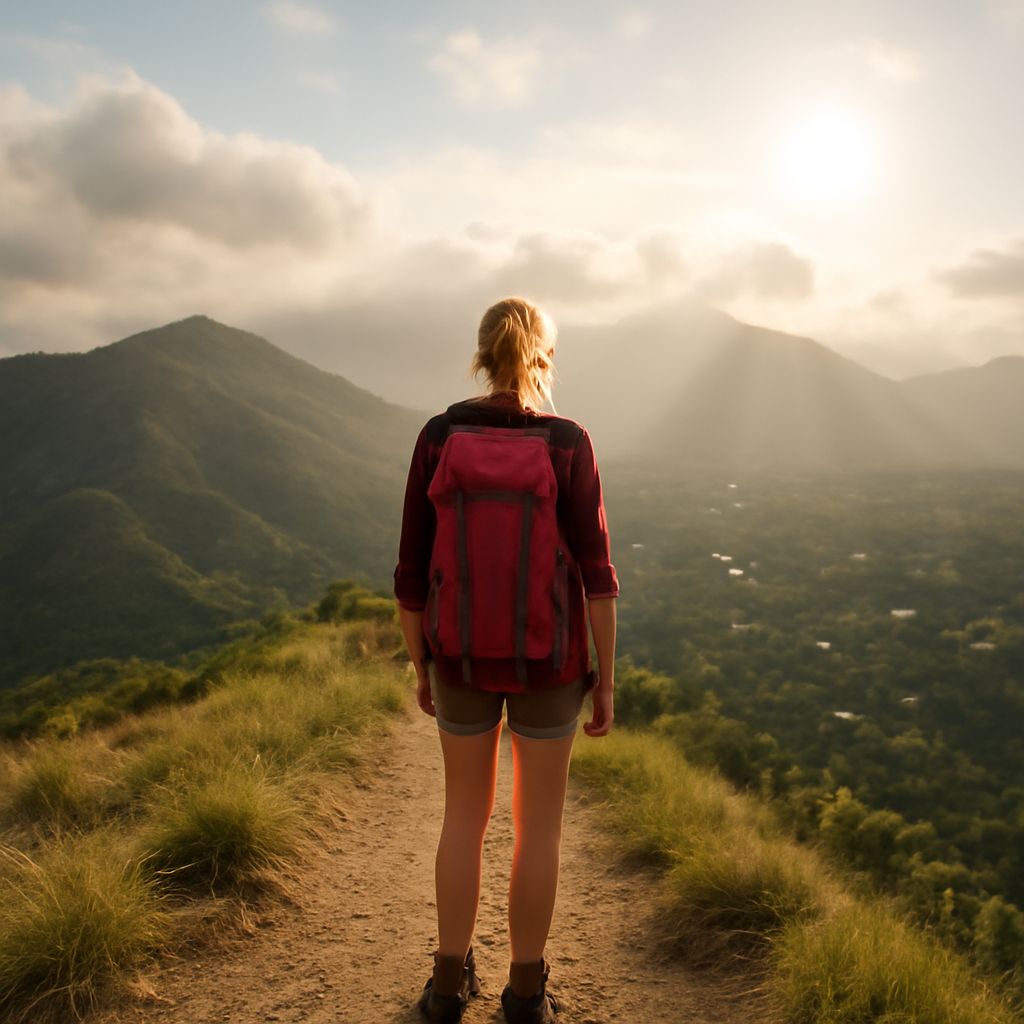
The morning looks clear in Santa Fe, but the trail climbs into cloud and your return may take longer than the walk out. A little thought about packing for a day hike keeps a wet shirt or an empty bottle from becoming the problem that ends your outing.
Start your packing list for a day hike with the route, not the contents of a gear store. Distance, climbing, water access, exposed ground, and hours of daylight determine what belongs in your bag.
Day Hike Pack List: Start With the Route
Before you decide what to pack for a day hike, find the round-trip distance and elevation gain, including the return. A short, steep trail can take longer than a longer, level one. Add time for slippery footing, breaks, photos, and the slowest person in your group. Check current trail conditions and closures with the park or a local guide.
Look at the forecast for the hours you will actually be out. Rain, wind, and cloud can change how a ridge feels; exposed sections also mean more sun and heat. Note where you can get drinking water, whether a stream crossing is involved, and where you can turn around. A stream that looks easy in the morning may rise after rain.
Set a turnaround time that leaves a daylight margin for the return. Tell someone reliable your route, group members, expected return time, and whom to contact if you are overdue. The National Park Service’s hiking guidance recommends planning for the whole return trip and carrying essentials even on a day outing.
A practical day hike pack list starts with the items below, then changes with the route. If you cannot carry enough water or navigate the trail confidently, choose a shorter outing or go with a knowledgeable guide.
Navigation and light
Download an offline map before leaving a connection. Mark the trailhead, junctions, and planned turnaround point, and carry a charged phone in a waterproof pouch. A paper map and compass provide a backup when a battery fails; learn to use them before setting out. At junctions, pause and check your position rather than counting on finding the same turn on the way back.
Carry a headlamp with fresh batteries or a charged battery, even when you expect to finish well before dark. A delay from a twisted ankle or a slow descent can use up your margin. Keep the light where you can reach it without emptying the pack, and bring a small power bank if your phone is part of your navigation plan.
Clothing for sun, rain, and a cooler ridge
Wear comfortable, broken-in footwear with grip suited to the trail. Muddy slopes and wet roots call for careful footing; trekking poles can help with balance. Choose socks that fit without bunching and put a dry spare pair in a sealed bag.
A breathable shirt, comfortable hiking pants or shorts, and a hat make a good base. Add a lightweight rain jacket, even if the valley is sunny, and an extra insulating layer for a cool, windy summit or a long stop. Keep that layer dry in a bag. Sunscreen, sunglasses, and insect repellent belong within reach. Follow product directions when applying sunscreen and repellent.
For a hot, exposed walk, favor sun coverage and add water. For a higher, wetter route, prioritize the rain shell, dry layer, and traction. The right gear for a day hike changes with the forecast and terrain, while the safety basics stay in the bag.
Water and food
Carry enough drinking water for the planned hours, conditions, and a delay. Hot weather, climbing, and limited shade increase your needs. The National Park Service advises considering the route’s water sources and treating water where necessary. Check locally whether a source is reliable; a blue line on a map is no promise of a safe refill.
For longer routes, bring a treatment method appropriate for the water and follow its instructions. A filter may require a separate disinfection step for viruses; check the product’s capabilities before relying on it. If you cannot establish a reliable refill, carry what you need from the start or change the route. Drink regularly and eat along the way. Do not force excessive amounts of water.
Pack a meal if your walk spans one, plus easy snacks such as nuts, fruit, or crackers. Add extra no-cook food in case of a delay. Keep it accessible so you can eat during a short stop, and take wrappers home.
First aid and a small emergency kit
Build a compact kit around problems you can manage: adhesive bandages, sterile dressings, blister care, tape, antiseptic wipes, and any personal medication. Add tweezers and any supplies needed for a known medical condition. Know how to use the contents, and replace anything used or expired.
Bring a whistle, an emergency blanket or lightweight shelter, and a small repair item such as tape. A whistle can help signal your location if you need assistance; the shelter helps reduce exposure while you wait. A fire starter may be appropriate where permitted and where you know how to use it safely. Carry a phone, but understand that reception may be absent in the mountains.
If someone is injured, stop, assess the situation, give first aid within your training, and call local emergency services if you have a signal. Keep the person sheltered and avoid moving them if doing so could worsen an injury. Stay together and use your trip plan to help rescuers locate you.
Adjust for the day
Imagine two outings. A short, shaded loop near town still needs water, navigation, light, first aid, and rain protection. On a longer, exposed ridge, increase water and sun protection, allow more time, and check the return route carefully. For a muddy forest trail, pack the shell and dry layer where you can reach them and allow extra time on the descent.
When deciding what to pack for a hike, think through the consequences of a delay at the farthest point. Can you find the way back, stay reasonably protected, and signal for help? That question makes the day hiking checklist more useful than a pile of equipment chosen without a route.
Before you leave
Use this day hiking gear list as a final check:
- Confirm distance, elevation gain, forecast, water access, and turnaround time.
- Leave your route and return time with someone reliable.
- Pack navigation, a charged light, water, food, and extra food.
- Add sun and rain protection, a dry layer, first aid, medication, whistle, and emergency shelter.
- Adjust the load for the terrain and weather, then check that everyone in the group knows the plan.