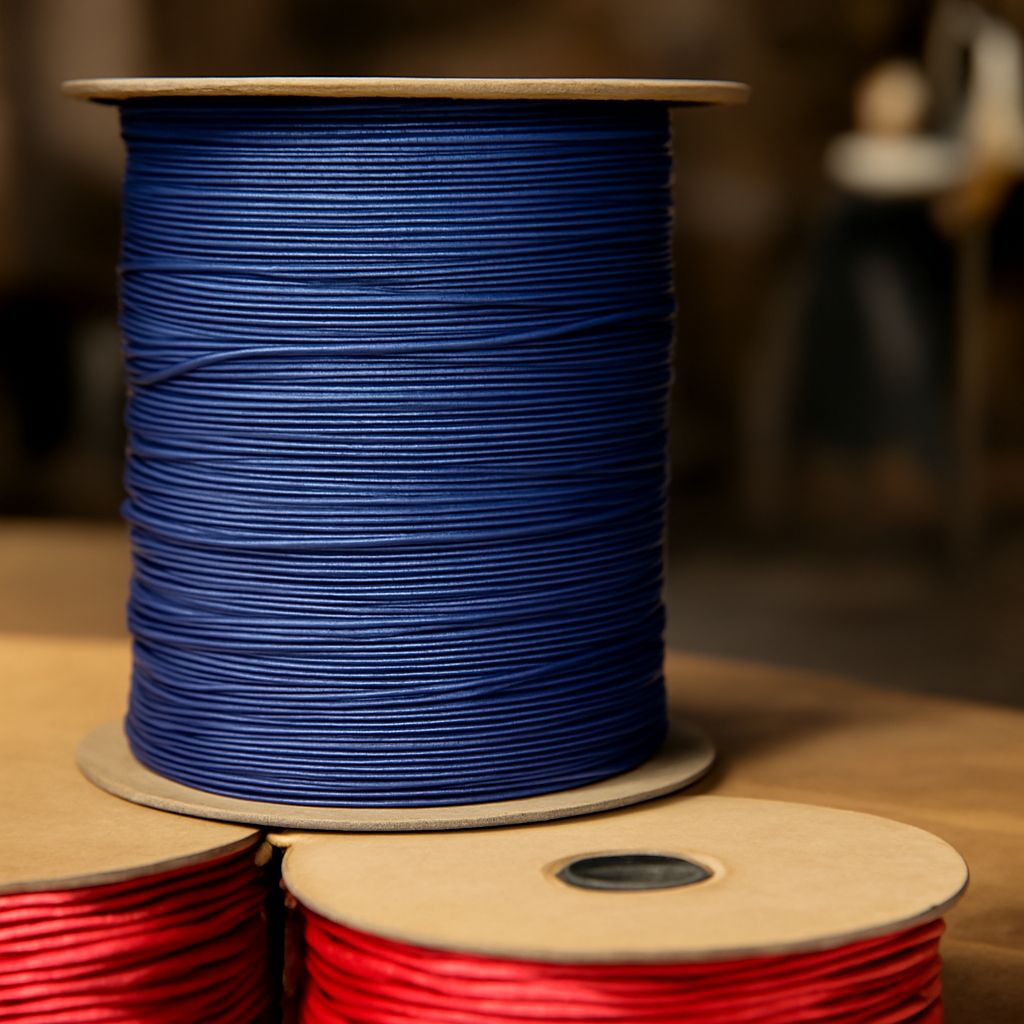
550 cord, often called paracord, is a lightweight nylon rope originally developed for military parachute lines. Today, it is widely recognized for its strength, versatility, and compactness, making it a staple in hiking, camping, and survival kits. Understanding what 550 cord is and how it performs can help outdoor enthusiasts select the best cordage for their needs on the trail and beyond.
Understanding 550 Cord: Definition and Origins
550 cord is the common name for a specific type of parachute cord—Type III paracord—originally designed to suspend US military parachutes during World War II. The “550” in 550 cord refers to its minimum breaking strength of 550 pounds (approximately 249 kilograms). Parachutists depended on this cord for safety, but its durability and practicality led to widespread adoption beyond military use.
Structurally, 550 cord features a woven nylon sheath encasing seven inner strands, each made from two or three twisted nylon fibers. This construction delivers both outer abrasion resistance and inner tensile strength. After WWII, surplus paracord became a favorite among outdoors enthusiasts, survivalists, and hikers, who valued its lightweight and multipurpose nature.
Asking what is 550 paracord means examining both its history and current applications. While modern versions are available in many colors and patterns, genuine mil-spec 550 cord (meeting MIL-C-5040H) remains the benchmark for quality and performance.
Although paracord comes in several types (I, II, III, IV), 550 cord specifically refers to Type III, which balances strength and manageability for most hiking and outdoor uses.
Key Features and Strength of 550 Cord
The defining characteristic of 550 cord is its combination of strength and flexibility. Rated for a minimum breaking strength of 550 pounds, it is strong enough for demanding outdoor tasks yet light and pliable enough to pack easily. The inner strands can also be separated and used individually for delicate work, such as sewing or fishing line, while the sheath remains usable as cordage.
550 cord’s seven-strand core construction is a major contributor to its utility. Each inner strand adds redundancy, so even if the outer sheath is damaged, the cord may retain much of its strength. The sheath protects the inner strands from abrasion and UV degradation, extending the cord’s life in rugged environments.
Another key feature is resistance to rot and mildew, thanks to its all-nylon construction. This makes 550 cord suitable for repeated exposure to water and damp weather, a crucial advantage for hikers and backpackers. Its smooth sheath allows for easy knot tying and untangling, making it user-friendly in the field.
Paracord’s diameter is typically around 4mm (5/32 inches), which strikes a balance between easy handling and portability. Authentic 550 cord can be identified by its seven inner strands—knockoff products often contain fewer strands or use inferior materials, compromising performance.
Common Uses of 550 Cord in Hiking
550 cord’s reputation among hikers stems from its wide range of practical applications. Its primary uses include:
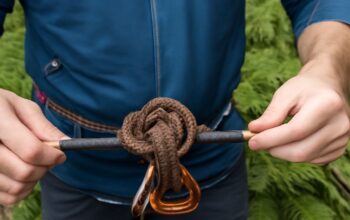
- Shelter Construction: 550 cord secures tarps, rain flies, and emergency shelters to trees or stakes. It can be used for ridgelines, guy lines, or lashing poles together.
- Gear Repair: The cord or its inner strands can temporarily mend broken backpack straps, tent poles, or shoelaces until proper repairs are possible.
- Clotheslines and Hanging Food: Its strength allows it to serve as a clothesline for drying wet gear, or as a bear-bag line to hoist food out of reach of wildlife.
- First Aid: In emergencies, 550 cord can improvise a tourniquet, create a splint, or secure a sling. The inner strands can even substitute for thread in suturing wounds.
- Navigation and Marking: Short segments can mark a trail, tie around objects to indicate directions, or act as emergency signaling devices when tied with bright-colored cord.
- Emergency Uses: In survival scenarios, 550 cord can construct a bow drill for fire-starting, fish for food with inner filaments, or build improvised snowshoes.
Its adaptability means a single 50-foot length of 550 cord can address dozens of unexpected needs on the trail, making it a vital addition to any hiker’s pack.
Many hikers also use paracord to craft bracelets, lanyards, or zipper pulls, allowing quick access to several feet of cordage in a compact, wearable form. These accessories can be unraveled in seconds when cord is suddenly required.
Tips for Choosing and Carrying 550 Cord on the Trail
Not all 550 cord is created equal. When choosing 550 cord for hiking or survival, look for products labeled as “mil-spec” or “Type III paracord,” and verify the cord contains seven inner strands with a smooth, tightly woven sheath. Avoid cords labeled generically as “paracord” without specifications, as these may use weaker materials or omit core strands.
Color selection can serve practical functions. Bright colors or reflective paracord are easier to find in low light and help prevent gear loss, while earth tones blend into the environment for stealth applications. Glow-in-the-dark options are available for nighttime use.
Most hikers carry 25 to 100 feet of 550 cord, depending on trip length and planned usage. Wind small bundles tightly to save space, secure with a rubber band or small carabiner, or braid into bracelets and lanyards. Packing cordage in separate lengths (e.g., one 30-foot and two 10-foot sections) can make deployment and reuse more efficient.
Practice tying common knots, such as the bowline, taut-line hitch, or square knot, before hitting the trail. Well-tied knots maximize the cord’s holding power and make later removal easier. Store cordage in an accessible, waterproof pouch or pocket to ensure it’s ready in an emergency.
Finally, periodically inspect your 550 cord for signs of wear, fraying, or sheath damage, especially after heavy use. Replace cord when structural integrity is compromised to maintain reliability in critical situations. With proper selection and care, 550 cord remains an invaluable tool for hiking preparedness.