Black spots on maple leaves and a dying branch call for different observations. By comparing the location, shape, and timing of symptoms, you can narrow down what might be affecting the tree and decide what information to share with a specialist.
Images of diseases on maple trees are useful for comparison, especially when paired with photographs of the whole canopy and trunk. The examples below come from North American university extension services; a similar mark elsewhere, including Panama, may have a different cause. A picture can suggest a possibility, but it cannot establish a diagnosis on its own.
Maple tree diseases pictures and the first comparison
Begin with a whole-tree view. Are marks scattered across leaves on an otherwise full crown, or is an entire branch wilting? Is damage concentrated near the trunk, on one side, or throughout the canopy? Then look closely at the affected tissue and note when the change began.
These maple tree diseases pictures from the University of Arkansas provide an illustrated gallery for comparing maple symptoms. Open the individual images and compare the pattern, not just the color. Several unrelated problems can produce a brown leaf; a photograph becomes more informative when you also know the weather and how the symptoms developed.
A suspected maple tree disease is one possible explanation; similar symptoms can result from insect damage or environmental stress. The distinctions matter because collecting observations is more useful than treating a symptom before its cause is understood. Record the maple species if known, but leave the name open if you are unsure.
Raised black spots or irregular brown patches?
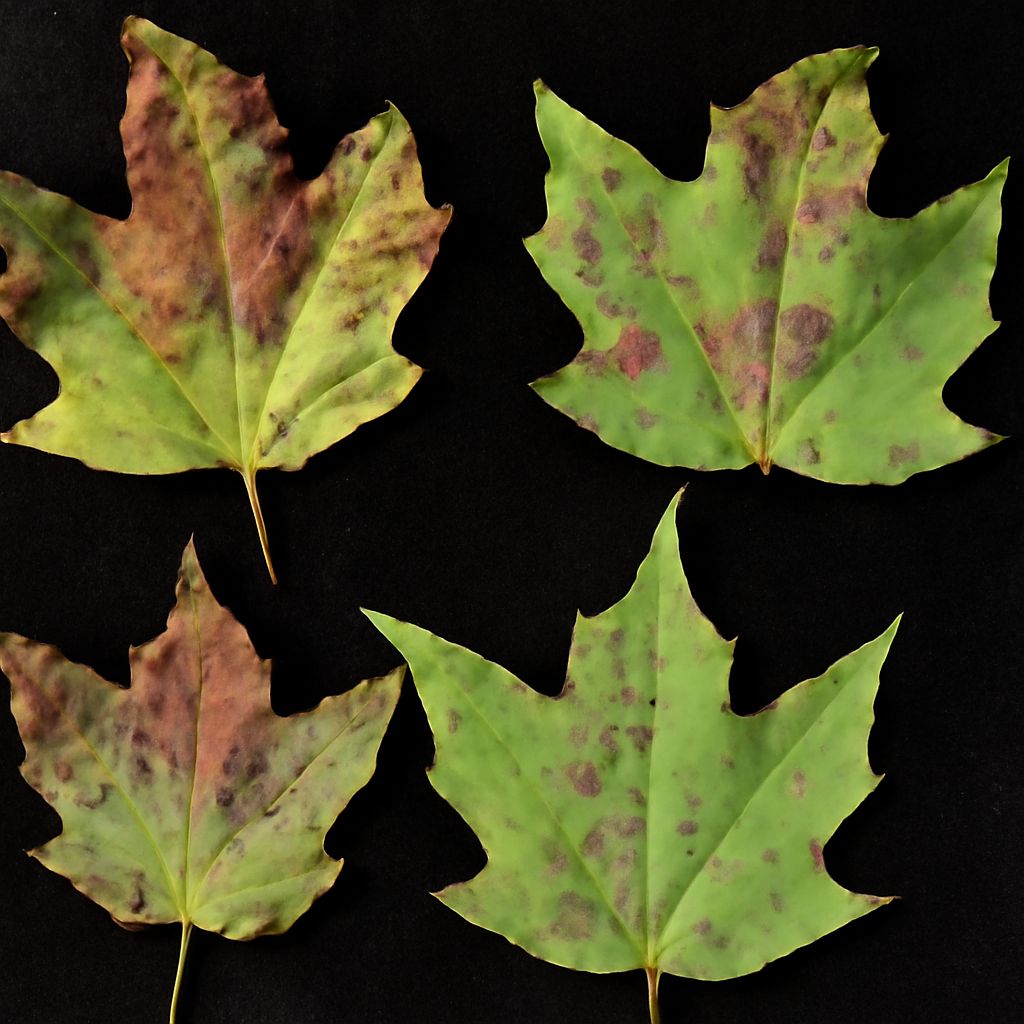
Tar spot often starts as pale or yellowish areas on the leaf. Later, raised black patches develop, sometimes with a yellow border. The Washington State University tar spot page includes photographs of affected leaves and a close view of the fungal structures. In its Pacific Northwest example, these conspicuous spots generally do relatively little harm, though severe spotting may cause some leaf drop.
Anthracnose can look different: irregular brown or dark areas may follow leaf veins, and young leaves may curl or shrivel. Wet conditions while leaves are expanding support this possibility. Compare the images and descriptions in the University of Minnesota’s maple leaf guide. If the damage is mostly along veins after a wet spring, that pattern is more suggestive than a few isolated black dots.
A maple leaf disease is not the only explanation for discolored foliage. Drought, excess water, salt exposure, or physical damage can also brown edges or patches. Check whether nearby plants show similar stress, whether the soil has been unusually dry or waterlogged, and whether the affected leaves appeared before or after a weather change.
Wilt, branch dieback, and bark changes
Verticillium wilt is caused by soilborne fungi that enter through roots and affect water-conducting tissue. Wilting or browning may appear suddenly on one branch or one side of the crown. Some affected maple wood shows greenish or dark streaks, but streaking is not always present and other problems can discolor wood.
Washington State University’s illustrated wilt guide shows both canopy symptoms and stained wood. Compare the extent and progression of symptoms, then contact a local plant diagnostic service if the tree is declining. A laboratory may need an appropriate sample to clarify the cause; ask for its sampling instructions rather than cutting into the tree yourself.
Sunken or damaged bark on a branch can be a canker, an area of dead tissue associated with several possible causes. The NC State maple disease guide includes images of cankers as well as wilt and leaf symptoms. Note whether the bark damage surrounds the branch, whether foliage beyond it has died, and whether there was a prior wound. Do not peel bark away simply to make a photograph clearer.
A fungal shelf needs a different response
A shelf-like growth attached to a trunk or major limb can be the fruiting body of a wood-decay fungus. Its appearance is a reason to assess the tree’s structure, not proof that you can determine the extent of decay from the outside. The University of Florida’s tree safety guide shows examples of conks and explains why decay is relevant to failure risk.
If you notice a maple tree fungus on a trunk or near the base, particularly where a falling limb or tree could reach people or property, keep clear of the area and arrange an assessment by a qualified arborist. Photograph the growth and its position from a safe distance. Mushrooms in surrounding soil can have different associations, so their presence alone does not identify a particular root disease.
A compact observation checklist
Before contacting an arborist or diagnostic laboratory, gather a small set of consistent notes:
- Photograph the whole tree, the affected branch or trunk, and close details of both sides of a leaf.
- Record the location, tree species if known, and when the problem first appeared. Repeat photographs from the same position to show change.
- Note recent rainfall, drought, standing water, construction, root disturbance, or changes to the soil around the tree.
- Describe the distribution: one leaf, one branch, one side of the crown, or the entire tree. Include any new bark damage or fungal growth.
- Ask the local diagnostic service which samples it needs and how to collect them; keep clear of unstable limbs while waiting for an assessment.