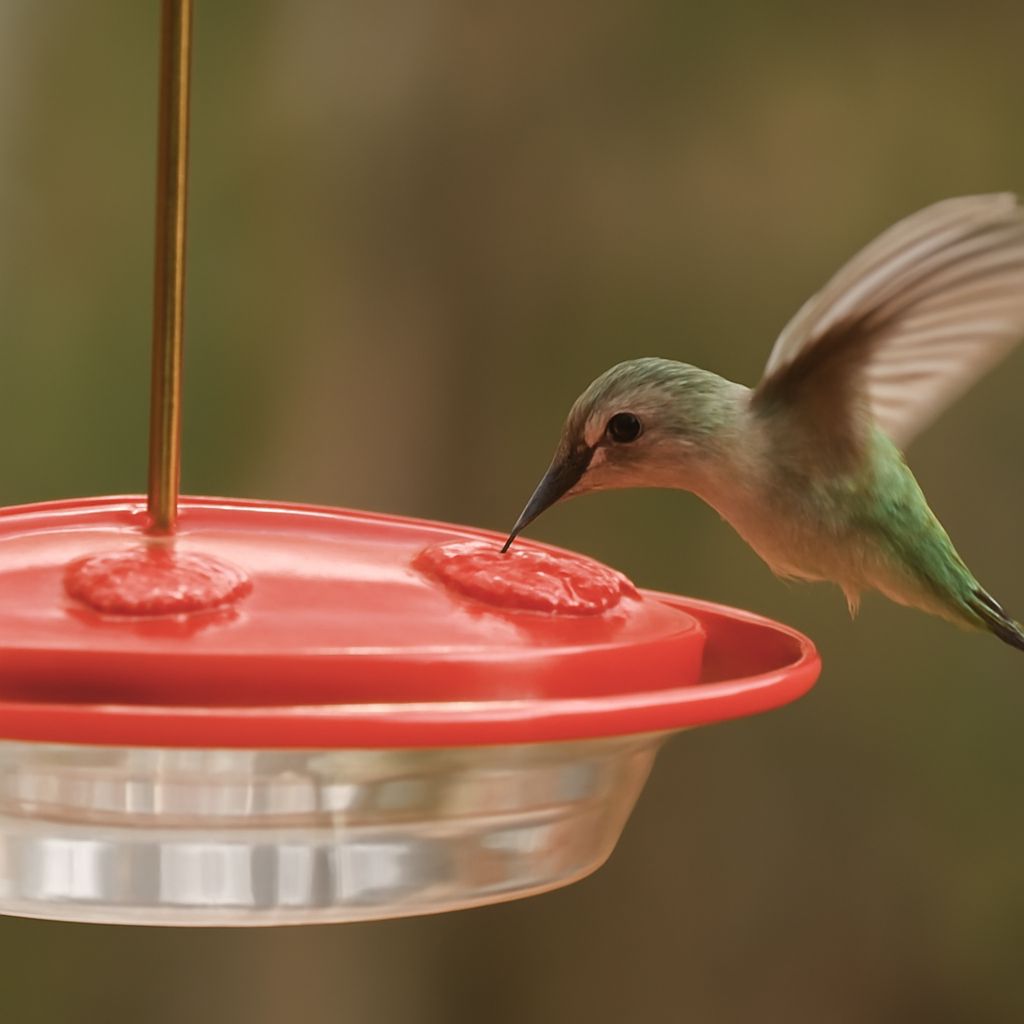
A small, easy-to-wash saucer suits a quiet porch where nectar lasts several days; a busy garden may need more feeding space and more frequent refills. The best feeder for hummingbirds is the one whose size and cleaning routine fit the birds and the person looking after it.
In a hot, humid setting, even the most appealing hummingbird feeders are only a good choice if someone can empty and clean them regularly. Compare how the parts come apart before you choose the prettiest red perch.
Best hummingbird feeders: two practical designs
Two common designs illustrate the trade-offs. A saucer holds liquid below feeding ports in a shallow basin. An inverted bottle feeds liquid into a base as birds drink. Both can attract hummingbirds; the shape changes how you fill, inspect, and clean them.
- Aspects HummZinger HighView: This 12-ounce polycarbonate saucer has four ports, a raised perch, and a built-in ant moat. Its lid comes off to expose the basin for filling and washing. Its low profile makes it easy to see inside, although the wide dish needs a reasonably level hanging position. See the manufacturer’s product page for model details.
- Perky-Pet Pinch-Waist Glass, 8-ounce: This inverted glass bottle has four flower-shaped ports, perches, an ant moat, and removable bee guards. Its wide mouth helps with filling; cleaning also means taking apart the base and small port pieces. The manufacturer’s product page shows the components.
For a small number of visitors, either capacity can work if you fill only as much as the birds drink before the next cleaning. A transparent bottle gives a quick view of the liquid level; a saucer makes the basin surface accessible once the lid is off. Glass has a pleasant weight but can break if dropped. Lightweight plastic is easier to carry, and its surface should be checked for scratches that make cleaning more difficult.
Ports, perches, and the problem of a crowded table
Four ports do not promise four peaceful diners. A territorial bird may chase others away from a feeder, even when several openings are empty. If that happens, try placing two small feeders out of sight of each other rather than buying one large reservoir. Watch whether more birds get a turn and whether you can maintain both stations.
Perches let birds rest while drinking and give you a longer look at them. Check that the openings are accessible without forcing a bird to reach around an oversized decoration. Flower-shaped covers and bee guards can help deter insects, but they also create extra surfaces to scrub. A simple opening you can reach with a small brush has an everyday advantage over an elaborate one that stays sticky.
Your all-time favorite feeder for hummingbirds may be the one with ports you can scrub quickly after a busy day. When comparing top hummingbird feeders, use hummingbird feeder reviews to assess disassembly and leaks as well as bird visits. A report about one crowded backyard does not tell you how a feeder will behave on your exposed balcony, and a beautiful photograph rarely shows the underside of a port after a humid week.
Leakage, capacity, and placement
Saucer designs keep the nectar below the openings, which can reduce dripping when the feeder is level. An inverted bottle relies on a seal and pressure to hold liquid in the reservoir; a loose base, damaged seal, or heat expansion can contribute to leaks. Hang either style securely, assemble it according to its instructions, and check beneath it after filling. A small drip is also an invitation to ants.
An ant moat is a cup of plain water between the hanging point and the feeder. Keep it topped up and clean; skip oils and pesticides where birds could contact them. A sheltered spot with some shade can slow direct heating and make the feeder easier to inspect. Choose a location you can reach safely for removal, with a clear view for the birds and space away from places where a cat can ambush them.
Capacity matters less than the amount used between cleanings. The best hummingbird feeder ever for a busy garden could be too large for a porch visited by one bird. Instead of filling to the rim, start with a modest amount and adjust after you see how quickly it is consumed. A larger reservoir is convenient for frequent visitors, but it still needs fresh nectar and a full wash on schedule.
Fresh nectar and a realistic cleaning routine
The Smithsonian’s National Zoo recommends mixing one part white granulated sugar with four parts water. For example, dissolve 1/4 cup sugar in 1 cup water, then let the mixture cool before filling. Do not add red dye, honey, or artificial sweetener. The feeder itself can provide the color that catches your eye.
Change the solution and thoroughly clean the feeder every other day, following the Smithsonian’s guidance. In intense heat or humidity, inspect it daily and change it sooner if it turns cloudy or you see mold. Empty the basin, take the parts apart, scrub the reservoir and ports with a dedicated brush, and rinse thoroughly before refilling. Follow the maker’s cleaning directions for the materials and any removable guards.
Before a trip, arrange for someone to maintain the feeder or take it down and wash it. Native flowering plants can also provide natural food and habitat, and local guidance can help you select species suited to your garden.
Choose the feeder you can maintain
A package may call a product the world’s best hummingbird feeder, but that is a claim to examine against your own setup. For a humid porch and a short cleaning interval, a small saucer with an accessible basin is a sensible first choice. If you prefer glass and can scrub the bottle and port pieces, the compact inverted model is another option. The best hummingbird feeders are the ones you can reach, dismantle, and clean as often as the conditions require.