A cultivated oyster mushroom comes with a supplier’s identification; a pale shelf on a fallen log comes with a question. When you find oyster-like mushrooms in the wild, learning to recognize their features can make a forest walk more interesting, but identifying an oyster mushroom for food requires a qualified expert familiar with the region. A photograph or a short checklist cannot make that decision for you.
Oyster mushroom identification starts with the whole find
Many Pleurotus species grow from wood and form fan- or shell-shaped caps. Look at the attachment to the substrate, the arrangement of the caps, and the underside together. In the examples described by the Missouri Department of Conservation, overlapping caps grow on wood, and narrow gills run down a short, off-center stalk. This downward attachment is called decurrent.
The stalk may be short or difficult to see from above. A mushroom that appears to rise from soil can be connected to buried wood or roots, so note what is actually visible rather than guessing. Photograph the group in place and include a wider view of the tree or log. A close view of the gills and the point of attachment can help an expert assess the find later.
These clues help with identifying oyster mushrooms as a possibility, not with declaring a specimen safe. Other fungi grow on wood, produce shelves, or have gills that descend a stalk. No single trait, smell, or spore color is a universal safety test.
Caps, gills, and stalks: what to notice
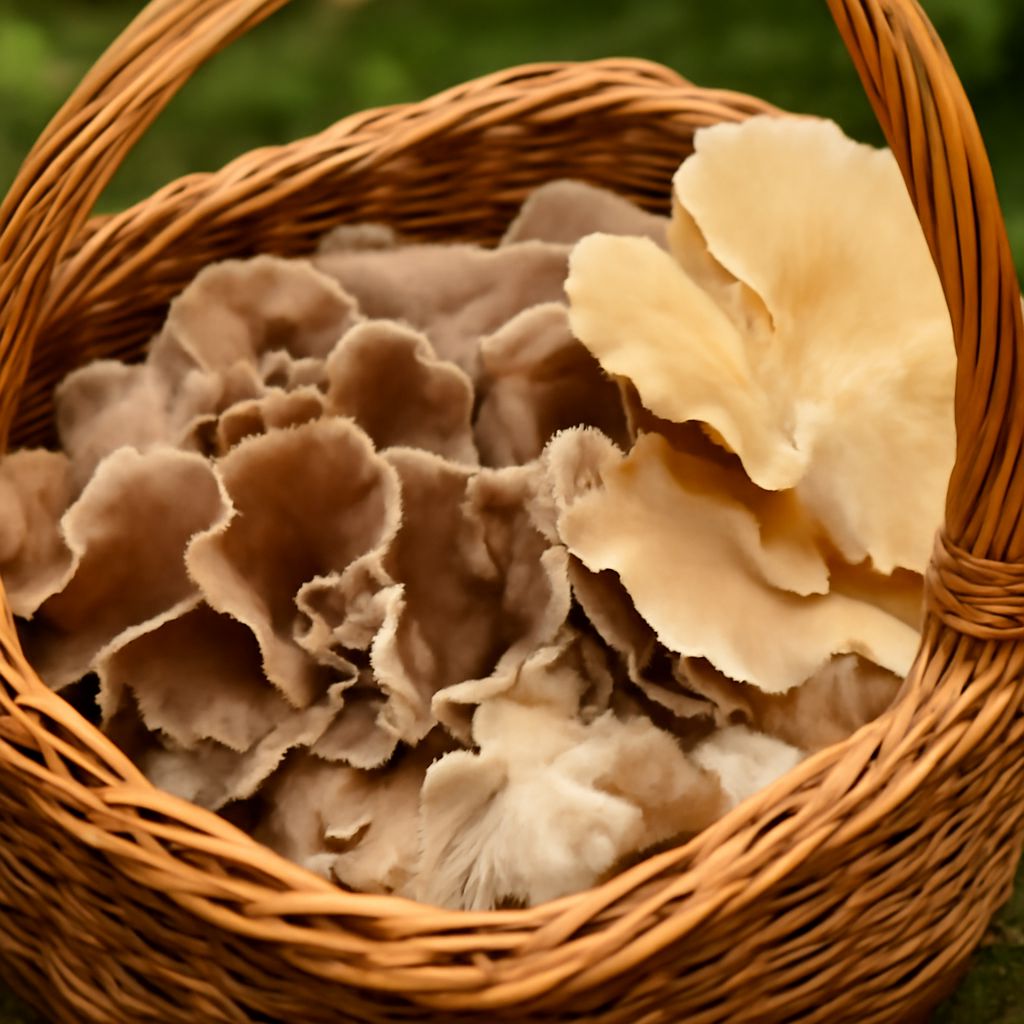
Start with the cap’s shape and surface. Is it semicircular, elongated, wavy at the margin, smooth, or textured? Note whether several caps overlap like shingles or a single one grows by itself. Color can shift with age, moisture, light, and species, so a pale cap is a description rather than a name.
Then look underneath without damaging the site. Gills are thin, blade-like structures radiating from the attachment area. If they extend down the stalk, record that feature and how far they appear to run. Some look-alikes also have descending gills; the direction of the gills is one piece of evidence, not a pass-or-fail test.
Finally, note where the stalk joins the cap. In many familiar examples it is off center or lateral, rather than a long stalk rising through the middle. Record any ring, veil remnants, or unusual texture if visible. Young and mature mushrooms can look different, and rain or decay may obscure features a field guide depicts clearly.
Two species, and the limits of visual comparison
Among the types of oyster mushrooms described in Missouri, Pleurotus ostreatus tends to have pale to dark brown caps and favors cooler spring and fall conditions. Pleurotus pulmonarius is described there as white to pale tan and more common in warm summer months. Both can have short, off-center stalks and descending gills. These are regional tendencies, not rules that identify every specimen by season or color.
The Missouri account illustrates how to identify oyster mushrooms by combining shape, substrate, and gill attachment. It does not establish that either named species occurs at every location with a similar-looking fungus. For a find in Panama, ask a regional mycologist or knowledgeable local fungal group which species and look-alikes are documented in that area. Tropical conditions and local species can change the comparison.
For oyster mushroom identification, experts may use spore characteristics, microscopy, or genetic methods as well as field features to separate close species. A spore print can add evidence, but a matching print alone cannot rule out all dangerous alternatives. Keep the uncertainty in your notes until the available evidence supports a specific name.
Dangerous and misleading look-alikes
The poisonous jack-o’-lantern, Omphalotus illudens, illustrates why wood and gills are not enough. The Missouri Department of Conservation describes its orange caps in clusters at tree bases, stumps, or buried wood; its gills also descend the stalk. It can cause serious illness if eaten. Its orange color and more prominent stalk often differ from the pale, short-stalked examples above, but color and shape overlap across fungi and change with conditions.
This is a North American example of a hazardous comparison, not a complete list for Panama. A pale oyster-like fungus can have a different set of regional look-alikes, including species whose toxicity or identity needs specialist evaluation. Do not use the absence of an orange cap as reassurance.
Poison Control cautions that identification knowledge from one region does not reliably transfer to another. Do not eat wild oyster mushrooms based on a photo, an app, this article, or a single field mark. If someone has eaten an unidentified wild mushroom, seek urgent poison-center or emergency medical advice immediately; do not wait for symptoms, which can be delayed. In the United States, Poison Control is available at 1-800-222-1222.
Field notes to bring to an expert
A good observation lets a local specialist see what you saw, while leaving the organism and its surroundings undisturbed. Include several images rather than a single attractive cap shot; a side view can show an attachment that disappears from above. Record these details:
- Location and date: Give the region, habitat, and approximate elevation if known.
- Substrate: Show the log, stump, living tree, or apparent soil and describe what is visible.
- Growth: Note overlapping clusters or solitary caps, plus the approximate cap width in inches.
- Cap and underside: Photograph color, surface, margin, gills, and where the gills meet the stalk.
- Stalk and age: Show the point of attachment and note visible rings, veil remnants, or signs of decay.
- Next step: Leave an uncertain wild oyster find uneaten and consult a qualified regional mushroom expert with the complete observation.