What these forest mammals eat depends on where they live and what food is available: a wild animal searches the canopy, while one in a zoo receives food selected by its keepers. To understand what kinkajous are, picture a small, nocturnal climber with a remarkably useful tail and a strong interest in ripe fruit.
What kind of animals are kinkajous? In Panama, these nocturnal climbers spend much of their lives above the forest floor. Their rounded ears and soft-looking faces can be disarming, but the best way to appreciate one is as a wild neighbor, going about its business among the branches after dark.
What Is a Kinkajou and Where Does It Live?
What is a kinkajou? Known scientifically as Potos flavus, it is a mammal in the raccoon family, found in tropical forests from Mexico through Central America and into South America. Its relatives include raccoons and coatis, although its tree-dwelling habits and long tail give it a character of its own.
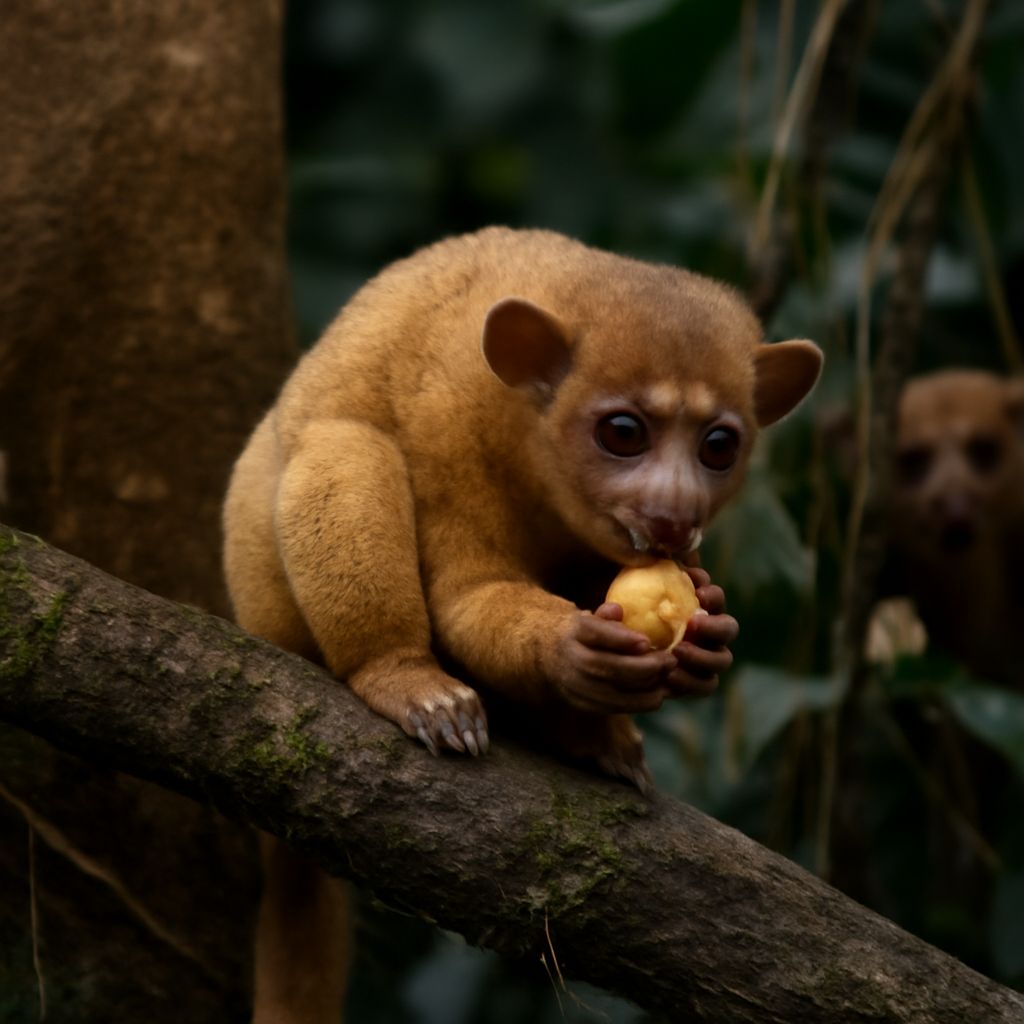
Its coat is dense and golden brown, its face has a short muzzle, and its large eyes suit a life of nighttime activity. The tail is prehensile: it can grip a branch and help the animal stay secure as it reaches or moves through the trees. Think of it as an extra anchor, handy when dinner hangs out of easy reach.
This is an animal shaped by the forest canopy. Connected branches offer routes between resting spots and feeding trees, and hollows provide places to sleep during the day. At night, the same upper layer becomes a network of possible meals. A fruiting tree may attract more than one visitor, although individuals often forage alone.
Fruit Is the Main Course
The kinkajou diet in the wild centers on fruit, especially ripe fruit when it is available. In a field study in central Panama, researcher Roland Kays combined observations of animals with analysis of their droppings. Ripe fruit accounted for about 91% of the observed feeding bouts, and the study identified fruit from 78 plant species. Figs were particularly important.
Those numbers describe that study, not a fixed menu for every forest or season. Different trees fruit at different times, and an animal’s choices depend on what it can find and reach. A large fruiting tree can be a valuable stop because it puts plenty of food in one place, high above the trail where a hiker might never notice it.
The diet of these nocturnal mammals also includes flowers and nectar, and observations elsewhere have recorded insects. In the Panama study, leaves and flowers made up a small share of feeding and no animal prey was observed. That distinction matters: one study can tell us a great deal about a particular population without describing every meal across the species’ range.
A Long Tongue and a Forest Connection
A long, extendable tongue helps reach into flowers for nectar. As an animal feeds, pollen can brush onto its face and travel to another flower. Fruit eating has another consequence: seeds can pass through the digestive system and be deposited elsewhere. Both activities connect a hungry climber with the plants around it.
The details vary by plant and place. A visit to a flower may move pollen, but whether it successfully pollinates that plant depends on the encounter. Likewise, a seed needs suitable conditions after it lands. The broader picture is still fascinating: an evening meal can carry the next generation of forest plants beyond the parent tree.
If you hear the nickname “honey bear,” don’t let it write the menu for you. The name is memorable; wild feeding records are a better guide to what these animals actually eat. Fruit, flowers and nectar provide a more useful picture than an assumption that honey is the staple.
What Changes in a Zoo?
A zoo meal tells you what keepers offer under managed conditions. It may include selected produce and other foods intended to meet nutritional needs, rather than the assortment of wild fruits available in a particular forest. A veterinary review of captive feeding discusses those nutritional considerations separately from field observations.
That makes a zoo visit a chance to watch how an animal handles food, uses its paws, or explores a branch. It is not a direct inventory of its wild food sources. A keeper’s prepared selection and a night’s search through fruiting trees answer different questions, even when both feature something sweet.
Looking Up on a Panama Night Walk
For a visitor near Santa Fe or elsewhere in Panama, identifying kinkajous starts with understanding what kind of creature you might see: a nocturnal mammal moving through trees, not a monkey swinging overhead. Look for a compact body, rounded ears, and a long gripping tail. A brief glimpse may not show every feature, so enjoy the encounter without forcing an identification.
Join a knowledgeable local guide where available, walk quietly, and give wildlife space. Follow the guide’s rules for lights; avoid shining a beam directly into an animal’s eyes, feeding it, or trying to touch it. At night, it is easy to focus so hard on the branches that you forget the trail under your own feet.
The reward may be a rustle rather than a clear view. Somewhere above, the forest canopy is both a path and a pantry, and the search for ripe fruit or a flowering tree continues long after the daytime walkers have gone home.