Tropical rainforest animals and plants live in connected layers, from treetops to soil. This guide uses examples from tropical forests in Central and South America, Africa, and Asia; the species do not all live in one rainforest.
In each layer, light, moisture, temperature, and shelter shape what can grow and move. An adaptation is a body feature or behavior that helps a living thing survive where it lives.
Tropical Rainforest Animals and Plants by Forest Layer
Emergent Trees and Canopy: Sunlight Above the Understory
The emergent layer contains the tallest trees, whose crowns rise above most of the forest. Below it, the canopy forms the leafy roof made by the tops and branches of many trees. The canopy receives strong sunlight and catches rain before it reaches the ground. Kapok trees and other tall trees stretch upward, while toucans, sloths, and howler monkeys find food and shelter among the branches.
Understory and Forest Floor: Lower Light and Rich Shelter
The understory lies beneath the canopy, so it has less light and often feels humid. Shrubs, young trees, palms, and large leaves grow here. The forest floor receives the least sunlight, but fallen leaves provide food and shelter for decomposers, insects, tapirs, and other animals. Decomposers break down dead material and return nutrients to the soil for plants to use.
Plants and Rainforest Flowers That Reach for Light
Light Seekers: Vines, Orchids, and Bromeliads
Vines use trees as support while climbing toward brighter places. Orchids and bromeliads may grow on branches as epiphytes, plants that use another plant for support without taking its food. Their roots, leaves, or cup-shaped structures collect water and debris. Rain forest flowers often grow where visiting insects, birds, or bats can find them, helping the plants reproduce.
Pollination: How Bees, Birds, and Bats Carry Pollen
Pollination is the movement of pollen from one flower’s male part to a flower’s female part. It allows many flowering plants to make seeds. Bright colors and sweet nectar can attract hummingbirds and bees, while strong scents may attract moths or bats. As an animal feeds, pollen sticks to its body and can be carried to the next flower.
Rainforest Animals for Kids: Adaptations by Layer
Canopy Adaptations: Sloths, Toucans, and Howler Monkeys
Sloths have curved claws for hanging from branches and move slowly, which helps them conserve energy while eating leaves. Their fur can support tiny algae, making them harder to notice. Toucans use large, lightweight bills to reach fruit on thin branches. Howler monkeys use strong limbs and grasping tails to travel through trees; their loud calls help groups communicate across the canopy.
Understory Adaptations: Tree Frogs and Ocelots
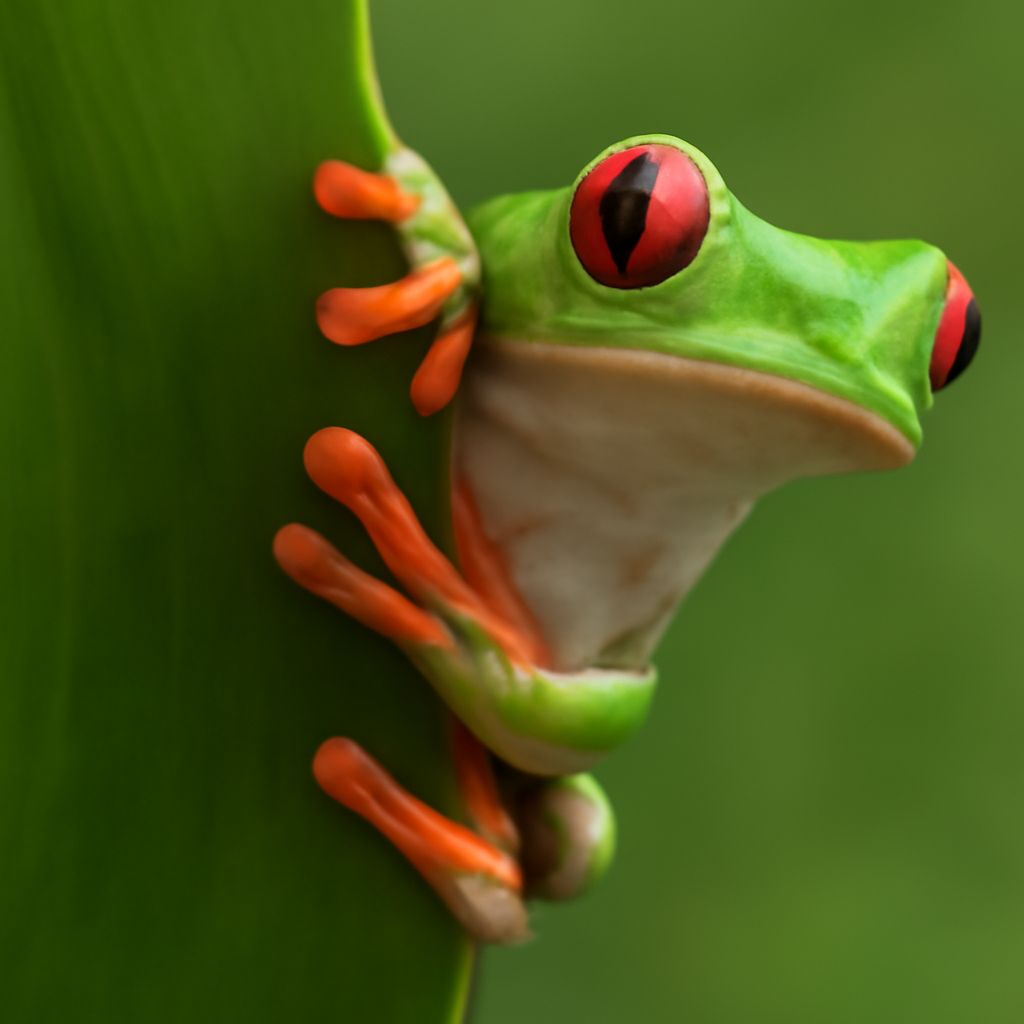
Tree frogs have sticky toe pads that help them grip wet leaves and branches. Their colors may provide camouflage or warn predators, depending on the species. Ocelots are spotted cats that often hunt in the understory, where their patterned coats blend with patches of light and shadow. Many are most active at night, when the cooler, darker forest offers cover.
Forest-Floor Adaptations: Tapirs and Leafcutter Ants
Tapirs use flexible snouts to pull up leaves and find fallen fruit. As they travel, they may carry and later deposit seeds in new places. Leafcutter ants cut pieces of leaves and bring them underground. They do not eat the leaves directly; instead, the leaves help feed a fungus that the colony eats.
How Rainforest Life Works Together
Food and Shelter: Fruits, Leaves, Nests, and Bromeliad Pools
Plants provide food in many forms: sloths eat leaves, toucans eat fruit, and insects feed on leaves, nectar, or decaying material. Branches and tree hollows become nesting or resting places. Bromeliad leaves can hold small pools of water where insects, larvae, and sometimes tree-frog tadpoles find shelter. In return, animals may pollinate flowers, eat pests, or spread seeds.
Seed Dispersal: How Toucans, Bats, and Agoutis Move Seeds
Seed dispersal means moving seeds away from the parent plant. Toucans and fruit-eating bats carry or swallow fruit and later drop the seeds elsewhere. Agoutis, small rodents in some American rainforests, bury extra seeds as food stores; seeds left in the soil may germinate. This movement reduces crowding near the parent tree and helps new plants grow in suitable patches.