A practical men’s hiking outfit for summer starts with a moisture-wicking base, airy outer layers, breathable footwear, and sun protection. Add an insulating or waterproof layer only when the forecast, elevation, or exposed terrain calls for it. The finished kit should move sweat away from the skin without leaving the hiker cold when conditions change.
Heat and foot moisture should be managed before adding walking support. Socks affect footwear fit, while a single stick or paired poles are optional tools suited to particular terrain, balance needs, and personal preference.
Build a Men’s Hiking Outfit for Summer: Breathable Layers
Begin with a lightweight synthetic or merino-blend T-shirt. These fabrics move perspiration away from the skin and dry faster than cotton, which can stay damp and feel cold during rest stops. A loose or regular fit improves airflow, but fabric should not hang so broadly that pack straps rub the shoulders.
For the next layer, choose a breathable sun shirt or a lightweight long-sleeve button-front shirt when the route is exposed. Long sleeves provide more reliable coverage from sun, brush, and insects than sunscreen alone. On hot, humid routes, a ventilated short-sleeve shirt can be more comfortable.
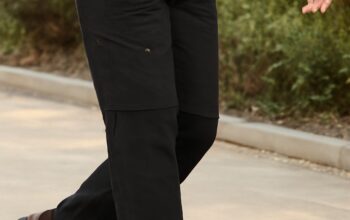
Shorts work well on maintained, low-brush trails. Lightweight stretch hiking pants are more versatile for rocky paths, ticks, strong sun, and cooler high-elevation sections. Both should allow a full stride and dry quickly. Avoid heavy denim and thick cotton, which restrict movement and hold water.
The footwear choice should match the route. Breathable trail shoes suit dry, established paths, while lightweight hiking shoes offer more structure for uneven ground. A secure heel, protected toe, and tread suited to the surface matter more than heavy construction. Complete the outfit with a brimmed cap or sun hat, sunglasses, sunscreen, and a lightweight rain shell or wind layer in the pack. A thin insulating layer is useful above treeline or on routes with a large elevation gain.
Choose Summer Hiking Socks for Heat, Moisture, and Fit
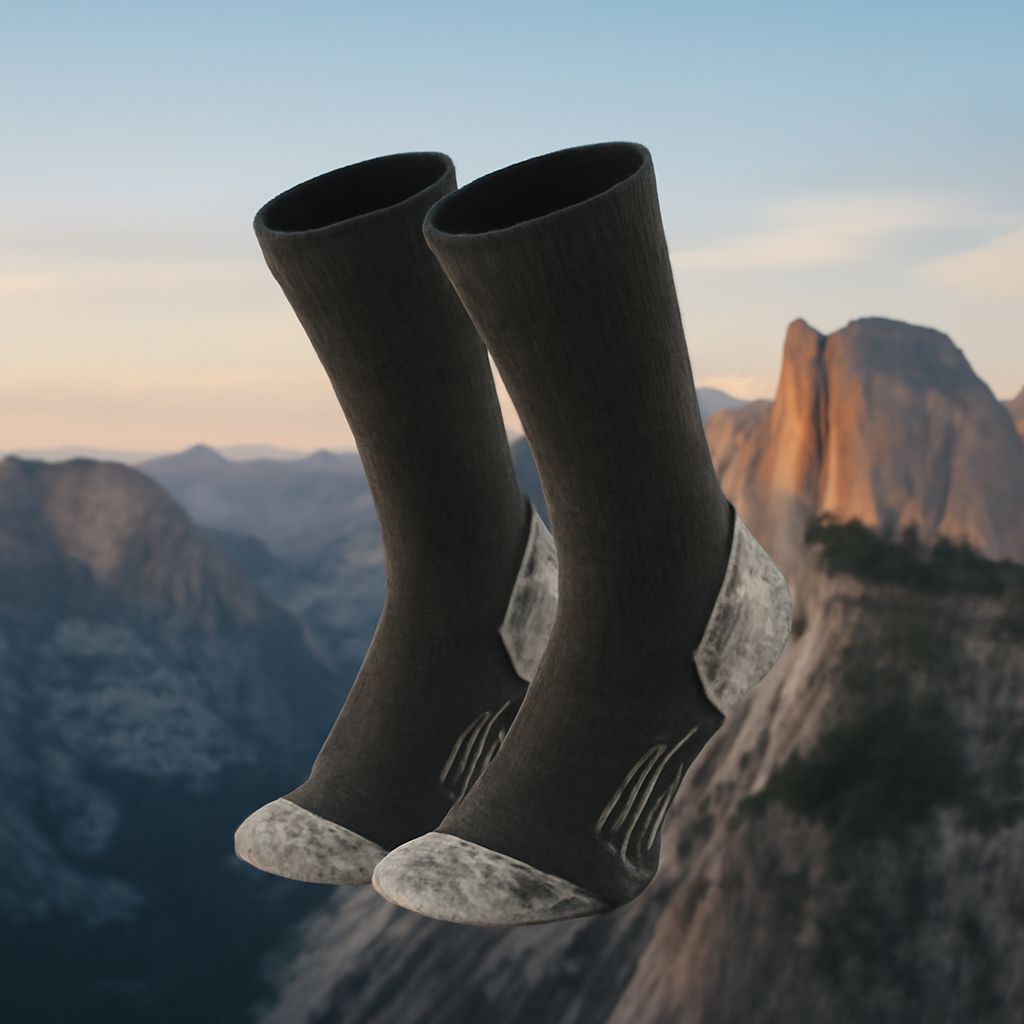
The best summer hiking socks balance drying speed, odor control, cushioning, and shoe volume. Merino wool regulates temperature and resists odor even when damp. Synthetic nylon, polyester, or polypropylene blends usually dry faster and can be more durable. A blend often provides a practical balance. Cotton is a poor choice for longer hikes because it absorbs sweat, dries slowly, and can increase friction against wet skin.
Select cushion according to the shoe and the route. Lightweight socks suit close-fitting trail shoes and hot conditions, while medium-cushion socks add comfort on rocky ground or during long descents. Extra cushion is not automatically better: a thick sock in a low-volume shoe can compress the toes, reduce ventilation, and create hot spots. The sock should fit smoothly at the heel and arch without wrinkles or loose fabric.
Moisture control depends on more than the material. A breathable shoe upper, a well-fitting sock, and regular airing all help. Mesh panels can release heat, while a water-resistant membrane may retain more sweat in warm weather. On a multiday trip, carry a dry spare pair and change socks when the worn pair becomes saturated or gritty. Anti-blister lubricant may help areas that repeatedly rub, but it cannot correct a cramped shoe.
Test the complete combination before the route. The hiking sock should leave enough footwear volume for the toes to spread and for the feet to swell slightly later in the day. The heel must remain secure without forcing the laces excessively tight. If a thicker sock makes the forefoot numb or the toes touch the front on descents, a roomier shoe is needed rather than a thinner sock.
Choose Walking Sticks for Hiking: Single Stick, Paired Poles, and Length
Walking sticks for hiking are optional, not mandatory equipment for every hiker. A single stick is useful when one hand needs support, when the route has occasional stream crossings, or when the hiker prefers a simple balance aid. It can also help probe mud, loose ground, or shallow obstacles. Its limitation is uneven support: one side receives most of the load, and the free hand remains less involved in stability.
Paired trekking poles distribute contact across both sides and can improve rhythm, balance, and control on long climbs or descents. They are particularly useful on loose scree, muddy trails, and routes carrying a heavier pack. They also allow the arms to share some work with the legs. However, poles occupy both hands, require coordination, and are unnecessary on easy, level paths for hikers who prefer free hands.
For paired poles, set the length so the elbow stays near a right angle when the handle is held on level ground. The forearm should be roughly parallel to the ground, with relaxed shoulders and a slight bend in the elbow. Shorten the poles by about 5 to 10 centimetres for steep climbs and lengthen them by about 5 to 10 centimetres for steep descents, while keeping the tips under control.
A single stick should generally reach the wrist crease when the arm hangs naturally, allowing a modest elbow bend while walking. Adjustable models make it easier to adapt to slopes. Wrist straps should support a relaxed grip rather than force the hand to clamp tightly. Rubber tips suit hard surfaces and reduce noise; carbide or metal tips provide better purchase on soil, but they can damage delicate trail surfaces.