Knife’s Edge on Mount Katahdin is Maine’s most celebrated and notorious mountain trail, famed for its narrow, rugged traverse and panoramic summit views. This stretch, known officially as the Knife Edge trail, challenges even experienced hikers with its exposed granite ridge and dramatic drops on either side. Planning a successful outing on Knife’s Edge Katahdin requires understanding the route, recognizing its hazards, and preparing thoroughly for both the climb and descent.
What Is Knife’s Edge on Mount Katahdin?
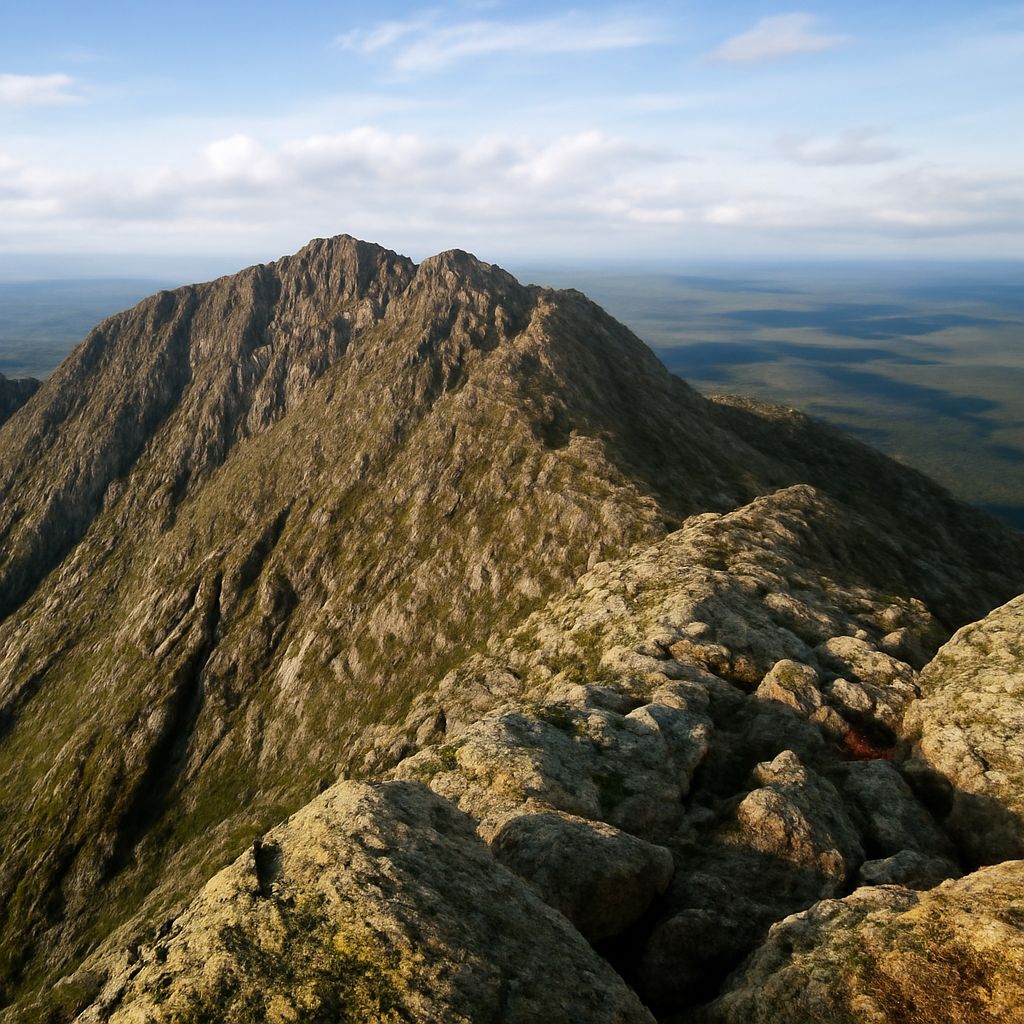
The Knife Edge is a narrow, one-mile-long ridgeline connecting Baxter Peak—the highest summit of Mount Katahdin at 5,267 feet—to Pamola Peak. Iconic for its dramatic drops, the ridge narrows to just a couple of feet wide in some places, with steep cliffs falling away hundreds of feet on both sides. Unlike most mountain trails in the Northeast, the Knife Edge trail is a full-body experience that demands scrambling, careful footwork, and steady nerves.
This section is part of the greater Mount Katahdin trail network in Baxter State Park and is a sought-after highlight of any Katahdin ascent. It draws adventurers seeking both a physical and psychological challenge, offering unforgettable vistas of the surrounding wilderness. The Knife Edge is not a loop; it serves as a connector between major peaks, requiring hikers to plan their full route and exit strategy in advance.
Hiking the Knife’s Edge Katahdin route is considered a bucket-list accomplishment. However, the trail’s difficulty and exposure to extreme weather mean it is only suitable for well-prepared, experienced hikers who understand the risks and requirements of such a demanding mountain environment.
Trail Overview: Distance, Elevation, and Route Options
The Knife Edge trail itself is approximately 1.1 miles long, but any hike incorporating it will cover a much greater distance. The most popular approach is to ascend via the Helon Taylor Trail (to Pamola Peak), traverse the Knife Edge, and descend via the Saddle Trail or Hunt Trail (the latter is also the Appalachian Trail terminus). This point-to-point route typically totals 8-10 miles and includes 3,800–4,100 feet of elevation gain.
The standard route is as follows:
- Start at Roaring Brook Campground using the Helon Taylor Trail (3.2 miles to Pamola Peak, strenuous ascent)
- Traverse the Knife Edge (1.1 miles, highly exposed, continuous scrambling required)
- Reach Baxter Peak, the highest point on Mount Katahdin
- Descend via the Saddle Trail (3.3 miles to Chimney Pond, then 3.0 miles to Roaring Brook), or take the Hunt Trail to Katahdin Stream Campground if logistics support a different car spot
Other less common options include approaching from the Cathedral or Abol trails, but these are even steeper and rockier. Regardless of the route, all routes involving Knife’s Edge require a rigorous climb and descent, with sustained high-elevation travel well above treeline. No water is available along the ridge, so hikers must be self-sufficient for the entire duration.
Knife Edge Trail Difficulty and Safety Considerations
The Knife Edge trail is classified as difficult to extreme for experienced hikers only. The ridge features extensive scrambling across exposed rock, with sections narrowing to just three feet wide. The most infamous point, known as “The Chimney,” requires a steep descent and exposed climb out between Pamola and Chimney Peaks, demanding both upper and lower body strength.
Severe exposure is the primary hazard. Falls from the Knife Edge would result in catastrophic injuries or worse, making surefootedness and a head for heights essential. Strong winds, sudden storms, and rapidly changing visibility are common, even in summer, and can turn the ridge into a dangerous trap. Lightning is a significant risk; the entire ridge is above treeline with zero shelter. Many accidents and rescues in Baxter State Park occur on or near the Knife Edge, typically due to poor preparation, weather, or overestimating ability.
Hikers should expect to move much more slowly on the Knife Edge than on typical mountain trails—often less than one mile per hour. Safe passage requires constant attention, deliberate movements, and a willingness to turn back if conditions deteriorate. This is not a recommended route for those with acrophobia, limited scrambling experience, or inadequate outdoor skills. Every attempt should be timed to avoid afternoon thunderstorms, and hikers must be off the ridge well before nightfall.
Planning Your Hike: Permits, Weather, and Gear
All hikes on Mount Katahdin, including those traversing the Knife Edge, require careful advance planning. Baxter State Park limits parking at trailheads, so hikers must secure a parking reservation online in advance. Day-use parking passes for Roaring Brook and Katahdin Stream Campgrounds are released in spring and can sell out quickly during peak season (July–September).
Weather is a critical factor. The Knife Edge is only advisable in stable, clear conditions. Even light rain can make the granite slick and hazardous, while fog can eliminate visibility along the narrow ridge. Always check the Mount Katahdin weather forecast right before your hike, and be prepared to cancel or reroute if storms threaten. Keep in mind that conditions on the summit can be 20–30°F cooler than the trailhead, with high wind speeds common.
Essential gear for a Knife Edge crossing includes:
- Sturdy hiking boots with excellent traction
- Weatherproof layers (including a windproof jacket and insulating clothing)
- 2-3 liters of water per person, plus high-calorie snacks
- A map, compass or GPS (do not rely solely on cell service)
- Emergency essentials, such as a headlamp, first aid kit, and whistle
- Gloves for scrambling on rough granite
- Sun protection (hat, sunglasses, sunscreen)
Start early to maximize daylight, and let someone know your route and expected return time. The park requires all visitors to sign in and out at trailhead registers. Leave no trace practices are strictly enforced, and group size is limited to 12 on Katahdin’s trails. For those new to exposed alpine routes, less committing Katahdin trails such as the Hunt Trail offer a challenging but safer option. However, for those who are prepared, the Knife’s Edge Katahdin experience remains one of the most exhilarating and memorable hikes in the Northeast.