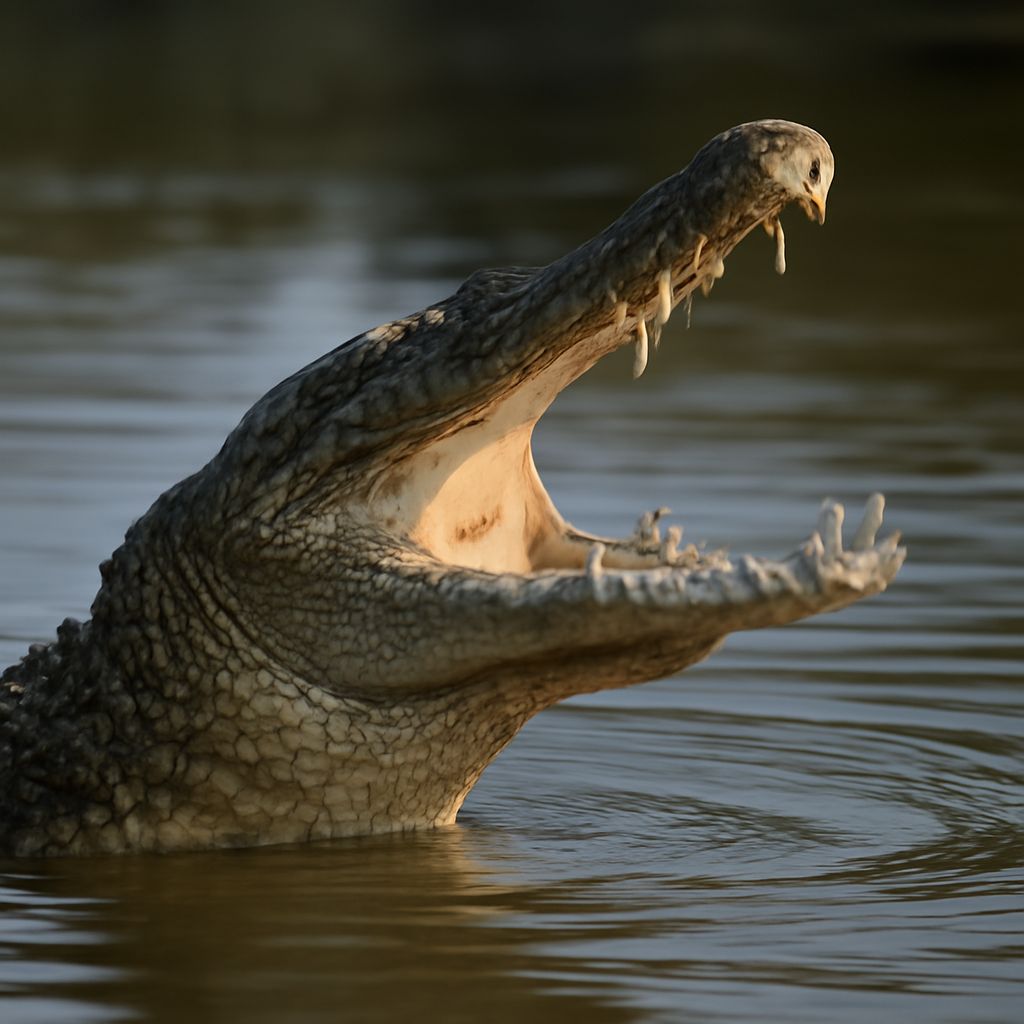
A mangrove-lined estuary on Panama’s coast offers a very different wildlife setting from a cool mountain stream near Santa Fe. If you are curious about where a crocodile lives, start with the species and the waterway: the American crocodile is associated with coastal habitats, while other crocodiles occupy different regions and environments.
The length of a crocodile varies with its species, age, and sex. That matters when comparing a photograph from the Americas with a giant from northern Australia: a remarkable measurement from one animal is not a reliable description of every crocodile you might encounter.
What makes a crocodile a crocodile?
What is a crocodile? It is a large, mostly aquatic reptile in the family Crocodylidae, part of the wider crocodilian group that also includes alligators, caimans, and gharials. To understand what defines a crocodile, consider how it lives: crocodiles breathe air, lay eggs on land, and rely on external heat sources to help regulate their body temperature. A sunny bank can serve as a warming spot; water and shade offer ways to cool down.
Other crocodile characteristics fit a life divided between water and land. Eyes and nostrils sit high on the head, allowing the animal to see and breathe while much of its body remains submerged. A muscular tail provides propulsion, and tough, scaled skin protects the body. The jaws carry pointed teeth for gripping prey, and lost teeth are replaced throughout life.
A crocodile can look almost motionless at the surface, but stillness is part of its hunting strategy. Depending on its size and species, it may eat fish, crustaceans, birds, or mammals. Young animals take smaller prey. These predators also become prey themselves, especially as eggs and hatchlings, and participate in a wider wetland food web.
Crocodile size: compare species, not headlines
Crocodile size varies, and a length from a record-breaking individual tells you little about the typical animal. These examples connect each measurement with its species and range:
- American crocodile (Crocodylus acutus): The University of Michigan’s Animal Diversity Web gives an average length of about 11.5 feet; males tend to be larger than females. It occurs from southern Florida and parts of the Caribbean along tropical American coasts, including Central America.
- Saltwater or estuarine crocodile (Crocodylus porosus): Native from parts of South and Southeast Asia to northern Australia, it uses rivers, estuaries, and coastal waters. The Australian Museum gives an average adult length of roughly 10 to 16 feet, with males typically much larger than females. Exceptionally large individuals exceed 20 feet.
- Cuban crocodile (Crocodylus rhombifer): Found only in Cuba, this species generally grows to about 10.5 feet, according to Smithsonian’s National Zoo. It is associated with freshwater wetlands and rarely swims in saltwater.
The size of a crocodile you actually see will depend on its life stage as well as its species. A small juvenile is still a wild predator, and its presence can also indicate that adults use the area. Keep your distance from both.
Where does the American crocodile live?
The American crocodile habitat includes coastal estuaries, mangrove swamps, lagoons, and connected waterways. It tolerates brackish and salt water and can also occur in freshwater. The Florida Fish and Wildlife Conservation Commission describes its range from southern Florida and Caribbean islands to coasts extending from Mexico southward to Venezuela on the Caribbean side and Peru on the Pacific side.
In Panama, think of coastal and lowland waterways when considering a place where these crocodiles live. That is a different setting from the mountain trails and cloud-forest streams around Santa Fe. Local water conditions and wildlife use vary, so follow signs and ask a guide or park staff about the specific river mouth, lagoon, or beach you plan to visit.
Mangroves offer more than a dramatic backdrop. Their tangled roots shelter fish and other animals, while nearby banks can provide basking and nesting areas. Protecting connected wetlands helps maintain the places crocodiles use throughout their lives, alongside habitat for many other species.
Crocodile or alligator?
An American crocodile often has a narrower, more tapered snout than an American alligator. In the crocodile, the large fourth tooth of the lower jaw is usually visible when the mouth is closed; in the alligator, lower teeth generally fit into sockets in the upper jaw. Color and snout shape can vary with age and viewing conditions, so use several clues together.
Caimans are another branch of the crocodilian group, and a quick glimpse of eyes above water may not reveal which animal you are watching. A photograph taken from a distance can help an expert identify it later. There is no need to move closer for a better look at its teeth: a zoom lens has much better manners.
What should you do if you see one?
Stay well back from the animal and the water’s edge, keep children and pets close, and give it a clear route away. Never feed it or throw fish scraps nearby. The Florida wildlife agency’s viewing guidance recommends swimming only in designated areas during daylight and following local safety rules. If a crocodile is close to people or behaving unusually, notify local wildlife or park authorities rather than approaching it.