Rain arrives while you are climbing a damp trail above Santa Fe, and your daypack is already on your back. A poncho for rain can cover both you and the pack quickly, but only if it has enough room and stays in place as you walk. A rain poncho for men should be judged with the clothing and gear it will actually cover; the same practical test applies to every fit category.
Mens Rain Poncho Fit: Measure the Full Setup
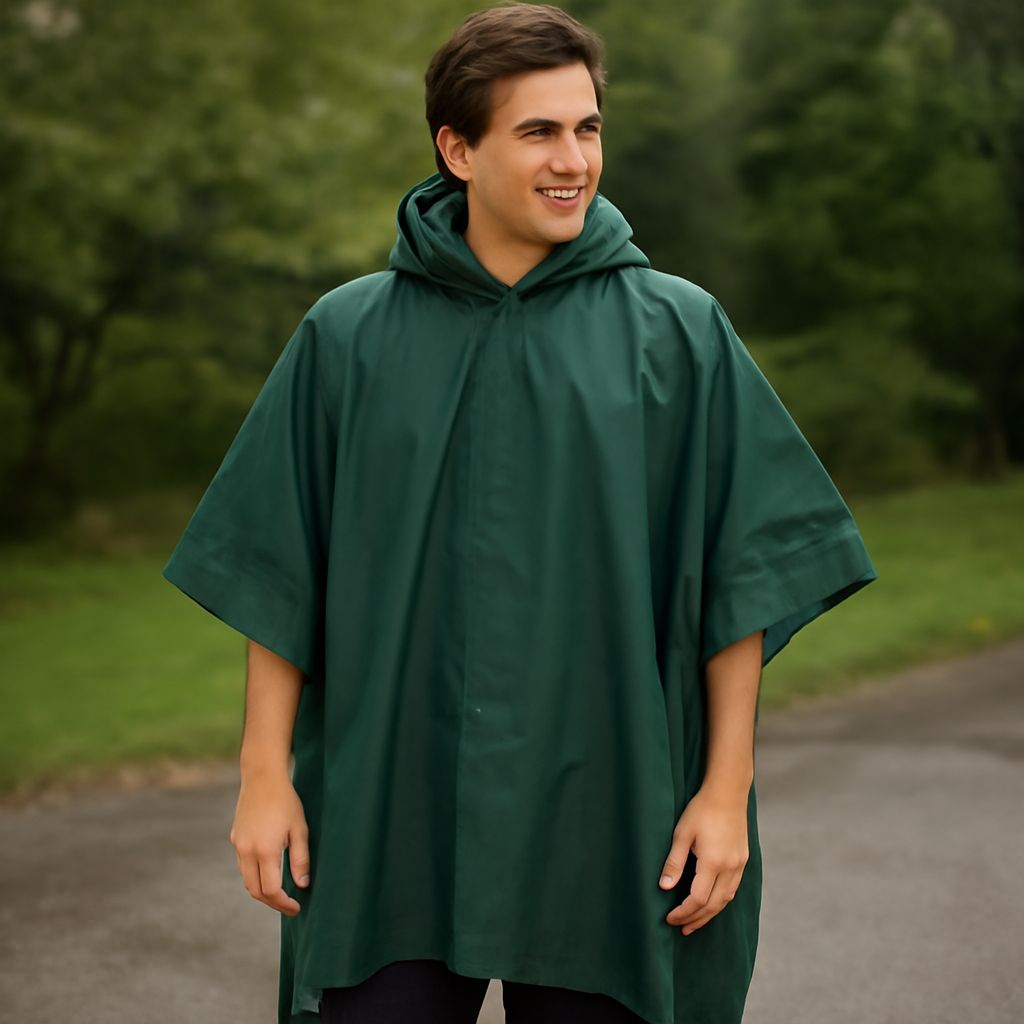
A mens rain poncho label is a starting point, not a measurement. Check the manufacturer’s dimensions for width, front length and back length, then compare them with your height, shoulder width and the layers you expect to wear. If the listing gives only a size name, ask for the garment measurements. A loose-looking photograph cannot tell you where the hem will fall when you raise your arms.
A womens rain poncho may use a different cut or size range, but the useful questions are the same. Does the hood move with your head? Can you reach forward without pulling the front above your waist? Does the back still cover your pack when you bend? Compare the measurements of each model with your body and equipment rather than assuming a category will fit.
Put the poncho on over a loaded backpack before removing tags or heading out. Fasten any side snaps and walk up a few steps. Reach for a water bottle, crouch and turn your head. A model that feels spacious while standing still can pull tight once a pack lifts the back panel. Check the return policy before testing outdoors, and keep the garment clean if you may need to exchange it.
Check Coverage From Hood to Hem
A practical raincoat poncho needs more than a broad sheet of waterproof material. The hood should adjust around your face without blocking your view. A small brim can help direct rain away from your eyes; a neck opening should close comfortably without leaving a large gap for water. Try the adjustments with the hood up and your head turned to both sides.
Length is a tradeoff. More fabric can cover your thighs and the lower part of a pack, but a very long hem may catch on steps or brush. On a muddy trail, look for enough clearance to lift your knees and see your feet. In a town shower, a longer cut may be convenient if walking is mostly on pavement.
Rain can enter at seams, the neck and side openings even when the fabric itself resists water. Look for stated waterproof construction and sealed seams, especially around the hood. A water-repellent surface helps droplets bead, but that treatment alone is not the same as a waterproof barrier. The maker’s specifications should explain the garment’s construction and care.
Pack Coverage and Ventilation
Some ponchos are shaped with extra space at the back for a pack; others are simple rectangles. Measure your loaded pack’s height and depth, then check the poncho’s dimensions and any stated pack allowance. A rain poncho sized for men may cover a small daypack well but pull up over a larger overnight load. A rain poncho designed for women can face the same problem: pack size matters as much as the garment label.
Try the hood over your head before pulling the back over the pack. Check that the hem reaches below the vulnerable top and sides without forcing the fabric tight. Pack straps and the bottom may still be exposed, particularly in wind. A waterproof liner or separate dry bags inside the pack give important items another layer of protection. REI’s rain advice notes that water can enter packs through seams and openings.
A loose poncho lets air move underneath, which can feel welcome in warm, humid conditions. That airflow comes through openings, however, and those openings can admit sideways rain. Side snaps or a waist cord can reduce flapping, but closing everything tightly may make the garment feel warmer. Try the available adjustments while walking, not only while posing in front of a mirror.
Plan for Wind and Rough Ground
On an exposed ridge, a wide poncho can act like a sail. Gusts may lift the hem, catch the hood or make footing harder to see. On narrow, overgrown trails, loose corners can snag on branches. A closer-fitting rain jacket and rain pants may be easier to manage in those conditions, especially where wind-driven rain is expected.
For a sheltered walk or a brief shower, the loose shape can be easy to put on and remove. For a longer mountain route, consider the whole weather plan: warm layers, a dry change of clothes and a way to protect essential gear. A poncho is one part of that plan. If conditions deteriorate, turn back or seek appropriate shelter rather than relying on fabric alone.
Balance Weight, Durability and Care
A very light emergency poncho can disappear into a small bag, making it useful as a backup. Thin material may also puncture or tear more easily against rough vegetation. Heavier fabric and reinforced attachment points can add durability, but take up more space and add weight. Compare the packed size with the place it will live in your daypack; rain gear is most useful when it is easy to reach.
For a women’s poncho for rain or a men’s poncho for wet weather, inspect the hood adjustment, seams and fasteners as closely as the weight. Look for repair instructions and check whether the material can be patched. A washable, reusable garment may suit frequent trips, while a compact backup may be enough for occasional city use.
After a wet walk, follow the maker’s cleaning directions and let the garment dry before storing it. Check for small tears around snaps and at the shoulders, where a pack may rub. A quick repair at home is easier than discovering a leak halfway along a trail.
Choose the poncho that fits over your real pack and layers while leaving you able to see, breathe and move comfortably.